
SCHOOL SERVICES · RAISE GENIUS
Robotics Camps for Schools: STEM Workshops
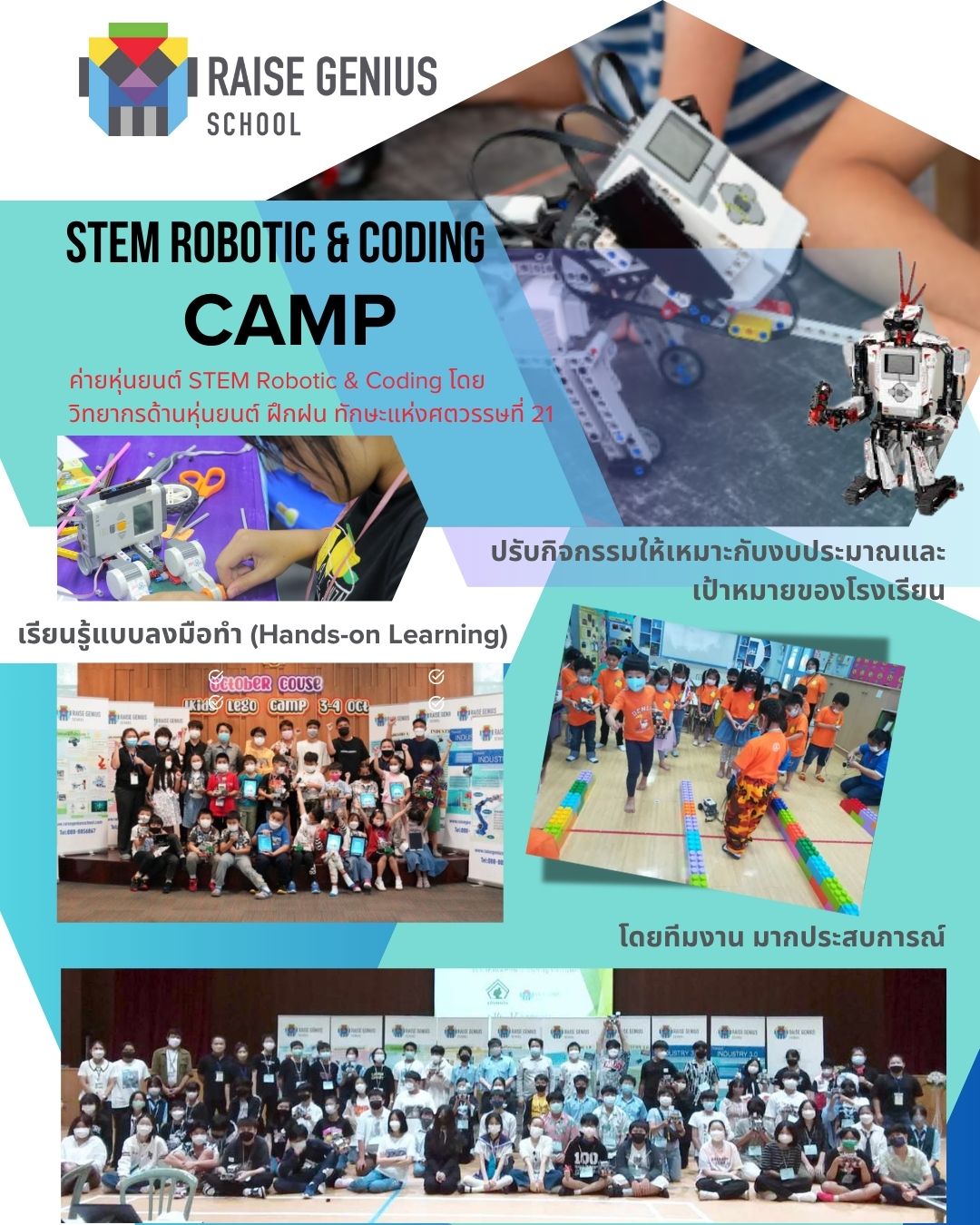
Robotics camps for schools bring thinking, building and practical experimentation together. Raise Genius organises STEM robotics camps and workshops for Primary 1 to Secondary 6, with activities adapted to the age group, budget and school’s learning goals.
Discuss your school’s plansOn this page
Learning through practical robotics challenges
The source describes camp-based learning through small activity groups. Pupils experiment, observe and solve problems using working robots. They practise presenting ideas, cooperating, imagining solutions and responding to challenges inspired by robotics competitions.
Science, technology, engineering, mathematics and computing are connected through the practical work. Recreational group activities help pupils meet one another and enjoy learning together. The objectives are to encourage curiosity, a positive attitude to STEM and the ability to exchange ideas and explain a solution.
The published team profile describes engineering graduates from KMUTT with experience in camps and workshops. The team prepares robot learning resources and recreational equipment for the agreed programme, and can adapt the activities to the school’s objectives.
Seven activity stages in robotics camps for schools
1. Meet the facilitators and form small pupil groups.
2. Explore basic robotics and examples of robots in everyday life.
3. Join recreational activities that support the group experience.
4. Try robot and automation games.
5. Build a robot as a team.
6. Test the robot through a mission or friendly challenge.
7. Review the learning, recognise participation and present any agreed awards.
These are the seven stages described in the original programme, not a fixed schedule for every camp. The source aims for each small group to build at least one robot and try it on a mission field. Confirm the actual construction activity, equipment, group arrangement and any awards in the agreed scope.
Duration, group size and venue
The original planning examples include a full-day workshop, a three-day camp and a Tuesday-to-Friday programme, with six activity hours per day where appropriate. Dates and duration are examples to discuss, not confirmed current sessions.
The source describes events ranging from twenty pupils to a school-scale programme of up to one thousand, with assistant teachers supporting the groups. The achievable capacity, staffing, rotations and hands-on time must be agreed for the selected age group, equipment and venue.
An indoor school hall, computer room or enclosed activity room can be suitable. The service describes both on-site and off-site arrangements. Share the proposed location, participant numbers and available facilities before requesting a plan and quotation.
Budget depends on the programme, duration, travel and pupil numbers. Ask the team to confirm fees, equipment, supervision and what the school must prepare. There is no single current camp price promised on this page.
Recent examples from the published archive
The archive records a 2026 Uttaradit School camp held in Phitsanulok, described as the third consecutive year of collaboration. Pupils explored current robotics topics, including humanoid robots and drones, and built and controlled robots in a Wither Storm Boss theme. The school and event-location wording follows the source and should be confirmed before reuse in new promotional material.
Other recorded activities include Saraburi Witthayakhom, with humanoid-robot updates and practical control; Anuchon Suksa in Kanchanaburi, with lower-secondary building and control; and Wat Nang Sao, with robotics introductions and hands-on challenges.
The source also describes a joint STEM activity with IQ Geniuz in Phetchabun, with Teacher Num invited by Ajarn Kitti for robotics and automation. Earlier Uttaradit activities combined robotics knowledge, construction, control and teamwork.
Additional examples include Chumchon Ban Khlong Khian in Nakhon Sawan on 25 July 2023; Assumption College English Program, Rama II, Years 1–3; Lertlah Kanchanaphisek lower-secondary pupils; Anuban Ratchaburi Primary 4–6; and Anuban Denla Phetkasem. These accounts describe earlier activities and their photographs.
More school workshops and historical camp projects
Matthayom Wat Sing pupils explored robotics, study and career directions, LEGO EV3 construction and programming. Sarawittaya upper-secondary pupils practised building and code. A Denla Robot Car camp focused on creating and controlling a vehicle.
The Sam Khok school STEAM robotics camp in Pathum Thani used a challenging thinking theme: creative and systematic thinking, designing within constraints, practical action, anticipating possibilities and recognising personal strengths. It encouraged perseverance and discussion of future learning and work, without guaranteeing a career outcome.
Yuwaphat Nakhon Sawan hosted an earlier three-day Industry 4.0 camp for Primary 1–4. Bangkok Bilingual School’s archive describes four days for Primary 1–2 and 3–5. Tessaban 1 Nong Sai in Udon Thani hosted three days of robot building and programming, with group photographs, certificates and an acknowledgement of additional school support.
ACEP Robot Camp 2017 involved nearly eighty pupils in Industry 4.0, Internet of Things, recreational and DIY robot activities. The source includes an earlier ACEP event of nearly seventy pupils and a photograph with Bro. Dr. Siriroj Viriyasirimongkol.
PTT Youth Camp brought more than one hundred lower-secondary, upper-secondary and vocational representatives to Ban Sirindhorn, NECTEC, Pathum Thani for innovation challenges. Other archive examples include Berkeley International School’s 2017 summer camp, a two-day Sap Noi Witthayakhom camp on 7–8 September 2017, Dipangkorn Rasmijoti Library, St Francis Xavier Convent, Metha International and Wansawangchit Kindergarten 2.
All these stories are historical examples. The general camp service above targets Primary 1 to Secondary 6; younger children shown in the archive require a separately agreed age-appropriate programme. Images may contain earlier dates, Thai captions or promotions.
Plan the school’s next camp
Start with the year groups, number of pupils and learning goals. Add the preferred dates, venue and indicative budget. The team can then discuss a suitable activity plan and confirm the practical details before booking.
The original page links to Thai articles on choosing a camp, preparing a school project proposal, planning for smaller schools and allowing time before the October break. Those articles remain Thai resources; this translation does not imply that they have been translated.
The published institute profile records earlier support through the KMUTT University Business Incubator, the National Innovation Agency and Department of Business Development franchise work. For current robotics camps for schools, contact Khun Pui or Teacher Num through the contact page and request an up-to-date written proposal.
Published project photographs
These images are retained from the original service page as examples of previous work. Some contain Thai text or historical dates and prices. Confirm current equipment, availability and conditions with the team.





Frequently asked questions
Which year groups can join robotics camps for schools?
The main service describes Primary 1 to Secondary 6, with challenges adapted to age and school goals. Younger pupils shown in archive photographs do not establish a current standard package; ask the team about a suitable separate arrangement.
What should the school prepare?
Prepare a suitable indoor hall, computer room or enclosed activity area and provide the pupil numbers. The team supplies the robot learning resources and recreational equipment included in the agreed plan. Confirm supervision, space and equipment before the event.
How many days does a camp take and what does it cost?
Duration and budget depend on the activities, group size and school’s requirements. The published multi-day and six-hour examples are planning formats. Contact the team for the current schedule, availability and a quotation before deciding.
Contact and related school services
Tell the team the school name, year groups, pupil or teacher numbers, preferred dates, location and budget. Agree the current content, equipment, fees, schedule and responsibilities in a written proposal before booking.
Contact Raise Genius School service overview
- School Robotics Curriculum & Classroom Setup
- Robotics Lessons for Schools: Curriculum & Timetables
- Minecraft Education for Schools: Coding Classrooms
- Microbit STEM for Schools: Robotics & Coding
- STEM Activity Stations for School Events
- Robotics Teacher Training: STEAM Classroom Practice
Teacher reference: IPST science and technology education resources (Thai).