
Movement, Mission Tools and the Operating Environment
RAISE GENIUS · PARENTS & SCHOOLS
Movement, Mission Tools and the Operating Environment
Rescue robot design questions in the archive cover movement, mission equipment, structure and control. They introduce a learning model, not a field-ready rescue system.
Contact the teamOn this page
Rescue robot design questions: how will it move?
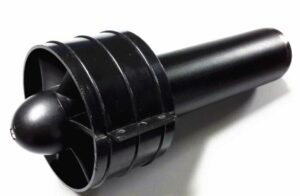
The first area is mobility. The source contrasts tracks for some uneven ground with propellers or thrusters for an underwater setting.
There is no single best arrangement for every rescue task. Ground conditions, obstacles, water, power and communications affect the design. A classroom track test does not establish reliability in a real collapsed structure.
What information or action is required?
The second area is mission equipment. The source names a camera for observation and a gripper for an appropriate handling task. The tool should follow a clearly defined purpose.
The archive also mentions bomb-disposal equipment. That is a specialist professional application, not a children’s activity or an invitation to handle a suspicious object. No operational disposal instructions are provided here.
Structure, software and communications work together
The third area combines the body and its control. A camera platform needs a way to move and point its view; a flying model needs appropriate flight control; an underwater system needs a design suited to water.
Light weight, water resistance or a strong shell are constraints rather than proof of safety. A strong-looking body is not automatically blast-resistant, and a remote connection does not ensure reliable operation in every environment.
A model can explore a question without being deployed
The original suggests considering three factors is enough to build a robot for real use without difficulty. That guarantee is corrected: real response equipment needs systematic testing, training and appropriate authorisation. NIST’s work illustrates the importance of repeatable performance evaluation.
Rescue robot design questions can be explored through a safe small model with simulated obstacles and a clear stop method. Actual emergencies belong to trained responders; the school project is a learning experience.
Original photographs and artwork
These images are retained from the original page as examples of published learning activities and programme information. Some contain Thai text or historical dates. They do not guarantee the same result for a new learner. Confirm current programmes with the team.
View original images



Frequently asked questions
Must every rescue robot use tracks?
No. Mobility depends on the task and environment.
Do three design headings establish field readiness?
No. Real response equipment requires evaluation, training and authorisation.
Can learners use a model in an actual emergency?
No. Use simulated activities and leave emergencies to trained responders.
Contact and related pages
Tell the team about the learner or organisation, relevant experience and the intended learning purpose. Confirm the current programme, equipment, availability, schedule and fees before booking.
Contact Raise Genius School service overview
- Curved Motion, Contact Forces and Engineered Restraints
- Positioning, Obstacle Sensing and Service Applications
- Observations, Computer Models and Communicating the Result
- Observation Tools and a Necessary Product Safety Correction
- The Thames Barrier, Boxwall and FloodBreak
- Chemistry, Fingerprint Traces and Reconstructing a Scene
- Infrared, Radio and the Actual Classroom Equipment
- Materials, Propulsion, Navigation and a Historical Correction
- Ideas, Gliders, Control and Building on Earlier Work
Course-selection guide · Robotics portfolio projects · Competition preparation · Team advice and coaching · Course guide · General FAQ
Related services: School robotics camps · STEM activity stations
Related learning: Raise Maker Arduino · micro:bit robotics · IOTBot & AI · Portfolio preparation · Camp proposal · Accompanying teachers
Related reference: NIST: performance of emergency response robots
