
Small Ideas, Mechanisms and Creative Construction
RAISE GENIUS · PARENTS & SCHOOLS
Small Ideas, Mechanisms and Creative Construction
Practising invention through play can start with a simple improvement. The archive distinguishes making a useful object from needing to work as a laboratory scientist.
Contact the teamOn this page
Practising invention through play with familiar materials
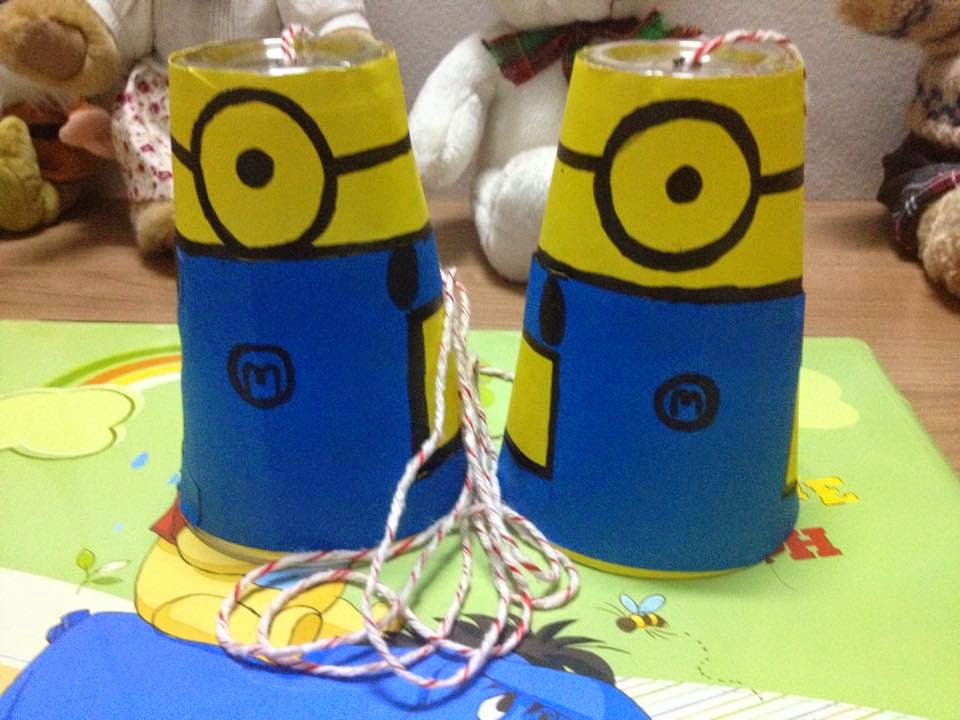
A paper-cup telephone, a watering bottle, a bottle money box and a bookmark illustrate everyday invention in the source. A child can propose, make and revise something without needing a professional job title.
The Thai archive also mentions a model made from a lighter. That is retained here only as source context, not a suggested children’s activity: choose safe craft materials and let an adult handle cutting or sharp tools. Do not dismantle fuel-containing items.
Look for a mechanism and room for an idea
The source suggests two useful qualities in a toy. One is a mechanism a learner can examine and understand. The other is room to add an idea instead of following only one possible arrangement.
Experiment sets, construction pieces, vehicles, aircraft and pretend kitchen equipment are examples. Pretend roles are open to any child. The purpose is to discuss how something works and what could change, not to promise a higher IQ from buying a product.
Connect a visible model with instructions
The author favours LEGO MINDSTORMS because it combines structural mechanisms with programming. A learner can investigate a visible support or movement and then connect it with a sequence or condition.
These are two complementary kinds of problem: one involves physical parts, the other involves representing an intended action through code. Ask the learner to explain both, rather than judging the work only by its finished appearance.
Make room for creativity and enjoyment
The archive connects enjoyment with willingness to remain involved in a project. A welcoming activity may make it easier to suggest another design, test an idea and discuss an unexpected result.
This does not establish that a particular mood or toy guarantees creativity or concentration. Choose an activity the child wants to explore, offer breaks and adjust the challenge. Related links provide a way to ask about current robotics equipment and programmes.
Original photographs and artwork
These images are retained from the original page as examples of published learning activities and programme information. Some contain Thai text or historical dates. They do not guarantee the same result for a new learner. Confirm current programmes with the team.
View original images


Frequently asked questions
Must an inventor work in a laboratory?
No. The article includes small everyday designs and improvements.
Which two toy qualities does the source discuss?
A mechanism to understand and space to contribute an original idea.
Should children dismantle lighters for models?
No. Use safe craft materials and appropriate adult help with tools.
Contact and related pages
Tell the team about the learner or organisation, relevant experience and the intended learning purpose. Confirm the current programme, equipment, availability, schedule and fees before booking.
Contact Raise Genius School service overview
- From Peekaboo to Questions about Quantities
- A Guide to the Archive’s Discussion of Cognitive Development
- How a Different Question Can Change a Robot Project
- Questions, Confidence and Manageable Challenges
- Thinking, Design, Hand Use and Sharing a Creation
- Exploring a Child’s Learning Strengths
- Discovering Children’s Interests without Pressure
- Teacher Bung on Connecting Learning at School and Home
- A Short Classroom Reflection on Learning Together
Course-selection guide · Robotics portfolio projects · Competition preparation · Team advice and coaching · Course guide · General FAQ
Related services: School robotics camps · STEM activity stations
Related learning: Raise Maker Arduino · micro:bit robotics · IOTBot & AI · Portfolio preparation · Camp proposal · Accompanying teachers
Related reference: NAEYC: developmentally appropriate practice

