
Find Shared Activities for Siblings of Different Ages
RAISE GENIUS · PARENTS & SCHOOLS
Find Shared Activities for Siblings of Different Ages
Activities for different-age siblings need to leave room for different interests and abilities. The archive describes families in which an older child wants a greater challenge while a younger child wants to join in.
Contact the teamOn this page
Activities for different-age siblings need shared ground
School, homework and weekend classes can reduce the time siblings spend playing together. Even when they are in the same place, the activity one child enjoys may be too complex or physically demanding for the other.
The source offers three examples rather than one solution for every household: swimming, selected tablet games and construction. Discuss what both children would enjoy and adjust the role or difficulty for each child.
Swimming and selected digital games
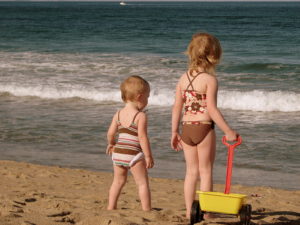
The archive suggests swimming as a shared activity but originally implies that flotation equipment removes the difficulty for a non-swimmer. That implication is unsafe: flotation toys do not replace close adult supervision or appropriate water-safety arrangements.
The American Red Cross advises constant attention around water and states that inflatable recreation items are not lifesaving equipment. Use a suitable supervised setting and do not make the older sibling responsible for supervising a younger non-swimmer.
The source also mentions a tablet game simple enough for the younger child yet interesting for the older one. Choose content together and agree on time, turn-taking and how to stop. A digital game is one possible shared activity, not an automatic recommendation for every age.
Give each builder a suitable challenge
Construction can let one child make a simple shape while another develops a more detailed model. The source uses LEGO to illustrate shared materials with different levels of complexity; watching and copying can be part of joining the activity.
Check each product’s age guidance before sharing. Small construction pieces must be kept away from children under three; an older child’s suitable set may not be suitable for a younger sibling. Separate materials or activities when safe sharing is not possible.
For siblings interested in moving robots or missions, ask Raise Genius whether the current class can accommodate both learners and what support each would receive. A trial invitation in the archive does not confirm a current offer or that all siblings can use the same equipment.
Original photographs and artwork
These images are retained from the original page as examples of published learning activities and programme information. Some contain Thai text or historical dates. They do not guarantee the same result for a new learner. Confirm current programmes with the team.
View original images
Frequently asked questions
Can a float ring make shared swimming safe for a non-swimmer?
No. Inflatable toys are not lifesaving equipment and do not replace close adult supervision or appropriate water-safety arrangements.
Can children of different ages share any LEGO set?
No. Follow the actual product age guidance and small-part warnings; use separate suitable materials when necessary.
Must siblings do exactly the same task?
No. A shared theme can include different roles or difficulty, provided both children can participate appropriately.
Contact and related pages
Tell the team about the learner or organisation, relevant experience and the intended learning purpose. Confirm the current programme, equipment, availability, schedule and fees before booking.
Contact Raise Genius School service overview
- From STEM to STEAM: Connecting Knowledge with New Ideas
- Why Do Some Children Enjoy Learning during the Holidays?
- Choose Toys around Age, Interests and Readiness
- From Concrete Examples to Abstract Thinking
- Learn a Little, Return to It and Make Practice Manageable
- Pretend Play: Build a Story with Flexible Materials
- Help Children Explore Their Interests through Activities
- Encourage Children to Try, Make and Recognise Progress
- Practise Analytical Thinking through Questions and Making
Course-selection guide · Robotics portfolio projects · Competition preparation · Team advice and coaching · Course guide · General FAQ
Related services: School robotics camps · STEM activity stations
Related learning: Raise Maker Arduino · micro:bit robotics · IOTBot & AI · Portfolio preparation · Camp proposal · Accompanying teachers
Related reference: American Red Cross: General Water Safety · CPSC: Think Toy Safety
