
Thinking, Design, Hand Use and Sharing a Creation
RAISE GENIUS · PARENTS & SCHOOLS
Thinking, Design, Hand Use and Sharing a Creation
Learning through robot construction can involve several kinds of practice. This English edition retains the archive’s examples while clarifying its older brain claims.
Contact the teamOn this page
Learning through robot construction: reasoning about a model
The archive describes replacing a part that is too short, balancing a structure and considering weight. Motors and sensors introduce further questions about an intended movement or response.
These are opportunities to reason about a tangible design. The source calls this “left-brain” development, but learning cannot be divided into a logical left-brain person and a creative right-brain person. The research reference below explains the limits of that popular distinction.
Imagine a form and compare spatial arrangements
The source’s next examples are an unusual character, a personal design and estimating the position of pieces when following a model. Planning, making and comparing can involve spatial and creative thinking together.
The original contrasts physical construction with a flat tablet display. A physical model offers handling and movement in space, while a digital activity may offer other representations. The article does not establish that spatial learning is impossible on a screen.
Practise hand movements without a deadline claim
Writing, modelling clay and joining pieces are the archive’s examples of using the hands for detailed work. Choose pieces and resistance appropriate to the learner, with help where needed.
The Thai source describes a once-only critical period after which hand skills might never develop. That absolute claim is not repeated as guidance: skills can continue to be practised, and a concern about development needs an appropriate professional assessment rather than a toy-based judgement.
Share a project and notice progress
The article values opportunities to explain work to friends and family and receive encouragement. Discuss a choice or improvement in concrete terms, without making a child’s value depend on a result.
Construction does not guarantee a particular personality, independence from peers or adult success. Thinking, physical activity and feelings all deserve attention, with support adapted to the person and the situation.
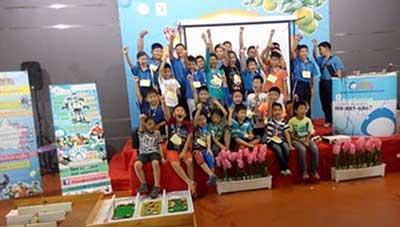
Original photographs and artwork
These images are retained from the original page as examples of published learning activities and programme information. Some contain Thai text or historical dates. They do not guarantee the same result for a new learner. Confirm current programmes with the team.
View original images

Frequently asked questions
Does construction train one side of the brain?
The examples involve connected abilities; they should not label a learner as left-brained or right-brained.
Is there one deadline for practising hand skills?
No. The archive’s irreversible deadline claim should not be used as guidance.
Does a completed robot guarantee confidence or success?
No. It can provide a situation for practice, explanation and encouragement.
Contact and related pages
Tell the team about the learner or organisation, relevant experience and the intended learning purpose. Confirm the current programme, equipment, availability, schedule and fees before booking.
Contact Raise Genius School service overview
- From Peekaboo to Questions about Quantities
- A Guide to the Archive’s Discussion of Cognitive Development
- How a Different Question Can Change a Robot Project
- Small Ideas, Mechanisms and Creative Construction
- Questions, Confidence and Manageable Challenges
- Exploring a Child’s Learning Strengths
- Discovering Children’s Interests without Pressure
- Teacher Bung on Connecting Learning at School and Home
- A Short Classroom Reflection on Learning Together
Course-selection guide · Robotics portfolio projects · Competition preparation · Team advice and coaching · Course guide · General FAQ
Related services: School robotics camps · STEM activity stations
Related learning: Raise Maker Arduino · micro:bit robotics · IOTBot & AI · Portfolio preparation · Camp proposal · Accompanying teachers
Related reference: NAEYC: developmentally appropriate practice · Nielsen and colleagues: testing the left-brain/right-brain hypothesis
