
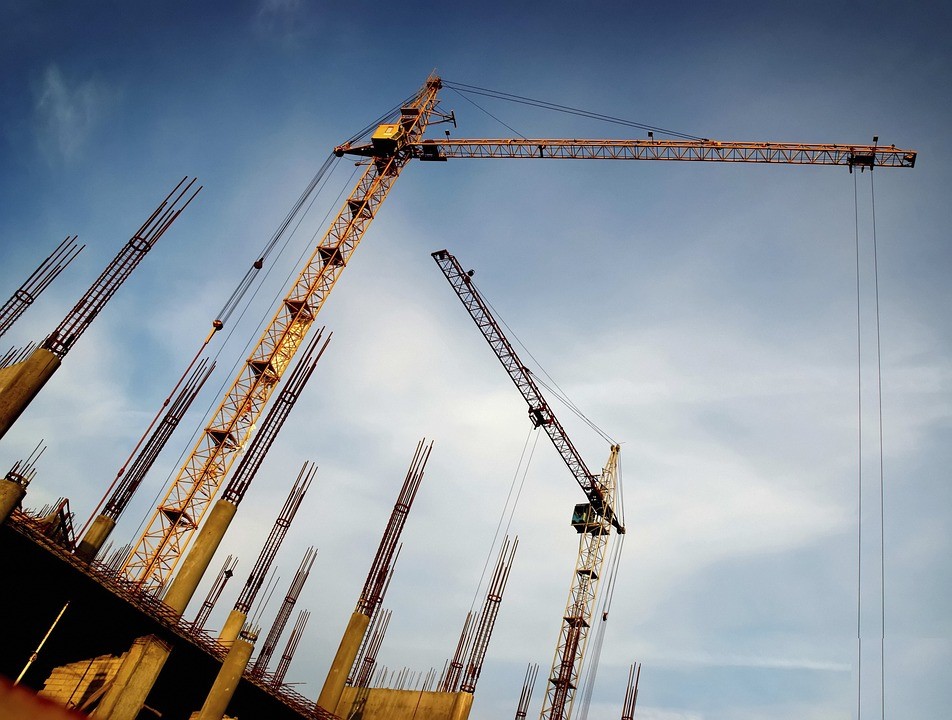
Changing Direction, Sharing a Load and Pulling More Rope
RAISE GENIUS · PARENTS & SCHOOLS
Changing Direction, Sharing a Load and Pulling More Rope
Cranes and pulley principles are introduced through a hook lowered on a rope. The article connects familiar lifting equipment with the idea of mechanical advantage.
Contact the teamOn this page
Cranes and pulley principles: start with the purpose
The archive contrasts a crane’s suspended hook with an excavator’s moving bucket. A crane combines structures, lifting equipment, controls and stability measures; it is not safe merely because a pulley makes a load easier to move.
The article uses a flagpole as a familiar example of changing the direction of a pull. A single ideal fixed pulley changes direction without reducing the required force.
A moving pulley and supporting rope sections
The source’s next example uses a movable pulley supported by two rope sections. In an ideal arrangement, the effort can be half the load’s weight while the rope travels twice the distance the load rises.
A block-and-tackle can involve more supporting sections. The mechanical advantage follows the actual arrangement, not simply the total number of wheels visible. Friction, the pulley’s own weight and other losses affect a real system.
Less effort trades against distance
The archive describes four supporting sections and a fourfold force reduction with four times the rope travel in an ideal case. The key is a trade-off, not creating energy or making a load weightless.
Check which rope sections support the moving load before applying that reasoning. A diagram or a safe small model can make the distinction clearer than a general claim that every pulley reduces force.
A learning model has strict limits
The author encourages questioning and trying an appropriate experiment. Keep model loads small and secure and keep hands clear of moving parts; do not lift people or work underneath a suspended load.
Cranes and pulley principles do not provide load ratings, rigging approval or instructions for real construction equipment. Actual lifting work requires suitable equipment, competent planning and trained operators.
Original photographs and artwork
These images are retained from the original page as examples of published learning activities and programme information. Some contain Thai text or historical dates. They do not guarantee the same result for a new learner. Confirm current programmes with the team.
View original images

Frequently asked questions
Does a single fixed pulley reduce the ideal effort?
No. It mainly changes the direction of the pull.
Does mechanical advantage create energy?
No. Lower force trades against a greater distance of pull, with real losses too.
Can a classroom model lift people?
No. Use only appropriate small learning loads and guidance.
Contact and related pages
Tell the team about the learner or organisation, relevant experience and the intended learning purpose. Confirm the current programme, equipment, availability, schedule and fees before booking.
Contact Raise Genius School service overview
- Instructions, Shared Services and Familiar Devices
- Guidance, Support, Power and Different Transport Concepts
- From a Checkout Belt to an Airport Baggage System
- A Wire-Walking Video and the Hardware–Software Relationship
- An Apparent Endless Mechanism Needs an Energy Explanation
- Recognising Containers, Recording a Return and Sorting
- Search, Training and What Self-Play Does Not Prove
- Hadrian, Wall Construction and the Rest of a Building
- Pretend Roles, Stories, Shared Building and Personal Designs
Course-selection guide · Robotics portfolio projects · Competition preparation · Team advice and coaching · Course guide · General FAQ
Related services: School robotics camps · STEM activity stations
Related learning: Raise Maker Arduino · micro:bit robotics · IOTBot & AI · Portfolio preparation · Camp proposal · Accompanying teachers
Related reference: OpenStax: conservation of energy

