Planning School STEM Robotics Camps & Budgets
RAISE GENIUS · PARENTS & SCHOOLS
Planning School STEM Robotics Camps & Budgets
School STEM robotics camps bring pupils together to construct and program robots through group activities. The source describes short camp-based learning, including one-day and three-day formats, with a plan that reflects the school’s pupil numbers, venue and budget.
Contact the teamOn this page
School STEM robotics camps and regular teaching differ
A camp is an intensive short experience, typically one-three days in the article. A regular subject or club provides continuing lessons over a longer period.
The source suggests camps for science days, open houses, orientation or special events that introduce a year group to robotics without first opening a permanent subject.
If a school wants continuity afterwards, curriculum planning and teacher preparation are related but distinct services. A short event does not itself establish a year-long programme.
Four planning checks for school STEM robotics camps
1. Learning purpose and audience. Describe what pupils should try and which year groups will attend, rather than begin with the largest possible attendance number.
2. Time. A one-day event can introduce construction and control. A three-day event offers more time to develop those activities. Confirm the proposed sequence and realistic tasks.
3. Venue and group rotation. Explain the rooms or spaces available, pupils participating at the same time and whether activity stations are needed.
4. Budget and responsibilities. Ask for the agreed content, teaching team, equipment, venue arrangements and costs to be specified for the school’s actual event.
Formats and numbers in the source
The one-day example is Tuesday-Friday, six hours for the selected day. Three consecutive days are described as Monday-Wednesday or Wednesday-Friday, six hours per day, or another agreed suitable arrangement.
The article includes Years 1-12, with an experienced teaching team. It describes groups from twenty to several hundred pupils, using activity stations for large events. These are source examples to scope, not a promise that hundreds work in one room or use one kit.
The opening allows an event at school or off site, while the budget discussion focuses on using a school’s existing meeting/activity room. This version keeps those as possible arrangements rather than silently treating an off-site venue as free or included.
Budget, venue and a next step
The source publishes no fixed camp price. It says a proposal can vary with pupil numbers and the school’s budget. The school-space example may avoid additional venue rental, but off-site costs and every inclusion require confirmation.
Ask about the number of teaching groups, assistants, equipment use, room layout and who provides each element. Do not combine this article’s minimum of twenty with a different page’s figures as if all refer to one package.
If the camp shows continuing interest, discuss a club, subject, teacher training or lab setup separately. School STEM robotics camps can introduce an opportunity; a sustained learning pathway needs its own plan.
Original photographs and artwork
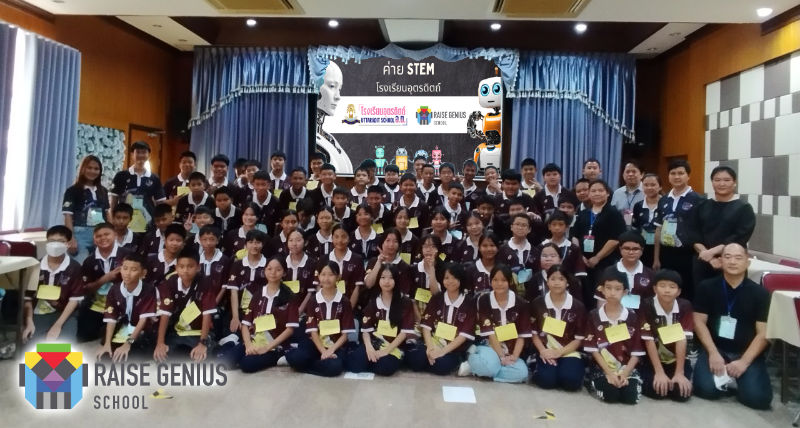
These images are retained from the original page as examples of published learning activities and programme information. Some contain Thai text or historical dates. They do not guarantee the same result for a new learner. Confirm current programmes with the team.
View original images

Frequently asked questions
How is a camp different from a robotics club?
The article describes a short, intensive one-three-day camp. A subject or club continues over a longer period and needs its own curriculum and teaching arrangements.
Should a school choose one day or three?
The source presents one day as an introduction and three days as more time to develop construction and control. Confirm the planned tasks, timetable and year groups with the team.
Is there a fixed price or universal pupil limit?
No fixed price is published. The source example ranges from twenty to several hundred pupils with activity stations for large groups; confirm the actual proposal, rotations and staffing.
Can an existing school room be used?
The source suggests meeting or activity rooms at school and also mentions off-site events. Confirm suitability, layout, costs and responsibilities for the chosen venue.
Contact and related pages
Tell the team about the learner or organisation, relevant experience and the intended learning purpose. Confirm the current programme, equipment, availability, schedule and fees before booking.
Contact Raise Genius School service overview
- Computer Specs for Children’s Coding Lessons
- How Much Parent Support Does Online Coding Need?
- Choosing Online Coding for Kids by Age & Readiness
- Online Robotics Learning When No Class Is Nearby
- Robotics for Small Schools with Limited Budgets
- Choosing Robotics Teacher Training for Your School
- Starting a School Robotics Classroom: People Before Kits
- Primary Computing Lessons: From Mechanisms to Code
- Helping a Child Become a Programmer: Build Foundations
Course-selection guide · Robotics portfolio projects · Competition preparation · Team advice and coaching · Course guide · General FAQ
Related services: School robotics camps · STEM activity stations
Related reference: IPST computing-education resources (Thai)