Robotics Camps for Small Schools: Start with the Group
RAISE GENIUS · PARENTS & SCHOOLS
Robotics Camps for Small Schools: Start with the Group
Robotics camps for small schools do not have to wait for hundreds of participants. The source gives a starting example of thirty pupils, with a visiting team bringing equipment and designing the activity around the actual group. The useful question is which format gives these pupils a worthwhile practical experience.
Contact the teamOn this page
Robotics camps for small schools can start with thirty pupils
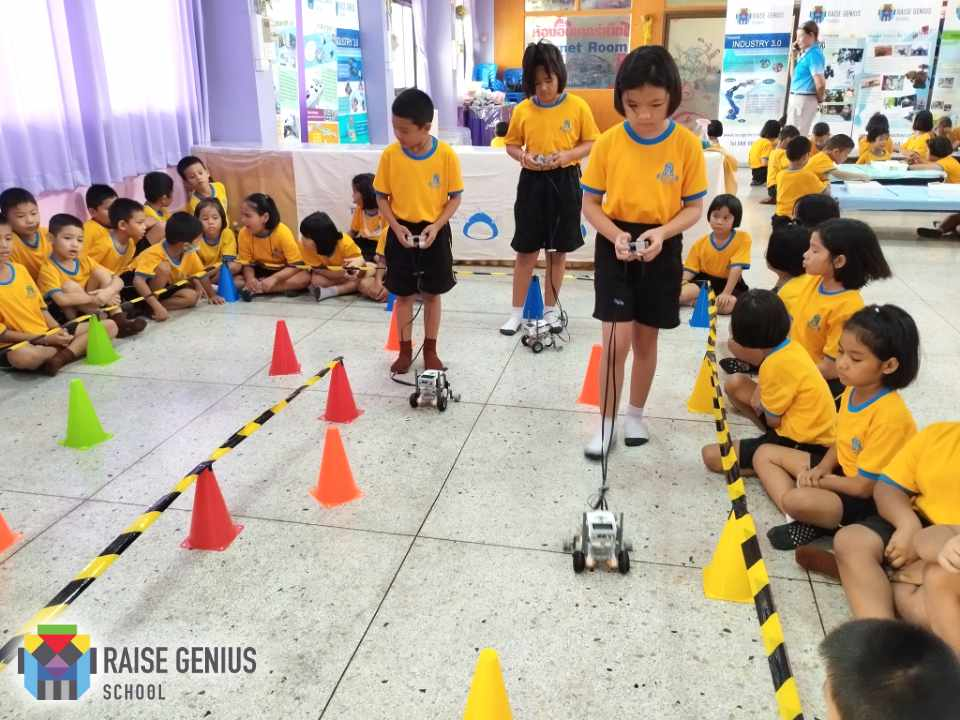
The published service spans thirty to one thousand learners across an appropriate event arrangement. For thirty pupils, the article suggests roughly eight to ten small working groups and at least one working robot per group as an activity aim.
Station numbers, staffing and rounds should be designed for the actual attendance. A plan for a school with three hundred participants should not simply be copied without checking the smaller group’s needs.
The source describes the visiting team bringing robotics and teaching media, with the school providing the agreed room and accompanying teachers. Confirm the exact equipment, project and deliverables in the quotation.
Four potential benefits of robotics camps for small schools
Longer turns with the equipment: fewer learners sharing a task can provide more opportunities to handle a controller, add a component or try a program change. Plan roles so that the opportunity reaches quiet pupils too.
More visible individual progress: instructors can more readily notice who needs help when the group and staffing are appropriate. This remains a planning benefit rather than a promise about every child’s outcome.
Flexibility within the day: a smaller event may allow more time for an activity pupils are exploring, subject to the agreed programme and breaks.
Shared experience for school teachers: accompanying teachers can observe the questions and organisation used in a practical lesson. Watching a camp is useful experience but does not replace a separate teacher-training programme.
Choose a format and consider a shared event
The original describes a full-day camp for a selected year band, around six hours and seven activity stages ending in a challenge and review. Its section introducing two possible formats gives incomplete detail; discuss a rotating-station alternative directly rather than infer a fixed second package.
Nearby schools can consider a joint event where useful. Agree the host venue, transport responsibilities, the year groups each school will send and one clear coordination process.
A joint event can share travel costs and bring pupils and teachers together, but it also changes travel and supervision arrangements. Each school should confirm its own approval responsibilities rather than assume the host handles everything.
Budget, venue and examples in the original archive
There is no single fixed price in this article. The source says cost depends on pupil numbers, days, distance and activity format. Share the numbers, year groups and preferred dates, obtain a proposal and quotation, then confirm booking.
An enclosed meeting or activity room is the preferred example. A suitable library may be considered if it offers enough table and mission space and appropriate sound separation, with a projector or large screen and audio as needed.
The source records events at Chumchon Ban Khlong Khian in Nakhon Sawan and a three-day activity at Municipal School 1 Nong Sai in Udon Thani. These are historical examples of delivered activities, not an identical current package.
The article describes service in Bangkok, surrounding provinces and other regions; distance affects the quotation. Confirm current travel availability, venue suitability, staff duties, dates and the agreed equipment before approval.
Original photographs and artwork
These images are retained from the original page as examples of published learning activities and programme information. Some contain Thai text or historical dates. They do not guarantee the same result for a new learner. Confirm current programmes with the team.
View original images

Frequently asked questions
What room can a small school use?
The source favours an enclosed meeting or activity room. A suitable library may also work after checking space, sound and audio/visual facilities. Agree the actual layout with the team.
Can a school outside Bangkok enquire?
The article describes past work in several provinces and wider regional travel. Confirm the current destination, availability and travel costs in the quotation.
Must the school already have a robotics teacher?
The visiting team leads the agreed technical activities. School teachers accompany groups and help participation and organisation. Ongoing subject teaching and teacher training are separate decisions.
Contact and related pages
Tell the team about the learner or organisation, relevant experience and the intended learning purpose. Confirm the current programme, equipment, availability, schedule and fees before booking.
Contact Raise Genius School service overview
- Study Paths for Young Inventors: Five Options
- School or Offsite Robotics Camps: Five Checks
- Individual or Group Coding Lessons for Children
- Academic or Vocational Robotics after Lower Secondary
- Choosing a Robotics Engineering Degree: Interests, Labs & Projects
- Preparing a School Robotics Camp Venue
- Primary and Secondary Robotics Camps: Match the Challenge
- Planning Robotics Stations for School Events
- An Authentic TCAS Portfolio: Show Your Own Work
Course-selection guide · Robotics portfolio projects · Competition preparation · Team advice and coaching · Course guide · General FAQ
Related services: School robotics camps · STEM activity stations
Related learning: Raise Maker Arduino · micro:bit robotics · IOTBot & AI · Portfolio preparation · Camp proposal · Accompanying teachers
Related reference: IPST STEM resources (Thai)