
Construction, Textures, Balance and Whole-Body Activity
RAISE GENIUS · PARENTS & SCHOOLS
Construction, Textures, Balance and Whole-Body Activity
Hand skills and movement play are compared in Teacher Bung’s archive article. Its examples include grasping, construction, balance, running and climbing.
Contact the teamOn this page
Hand skills and movement play: notice the task
The source introduces fine motor skills through small movements, especially opening and closing the hands, picking up and placing objects. It contrasts these with larger movements involving the shoulders, arms, hips and legs.
The archive gives ages one to three and four to six as broad examples for choosing construction pieces. Follow the actual product’s age and safety guidance and the learner’s abilities. Fine motor development does not finish permanently at six.
Choose suitable pieces and explore textures
The article suggests larger objects for an early grasp-and-place task and appropriately sized construction pieces as a learner gains experience. Rough, smooth, soft and firm textures offer different handling experiences.
Looking while joining pieces can connect hand actions with a visible arrangement. A model also offers a way to discuss shapes and positions. These are practice opportunities, not proof that one toy guarantees later mathematics achievement.
Balance and whole-body movement
The source discusses the toes’ contribution to movement and gives hopping and pushing through the feet in water as examples. Larger movement examples include running, jumping, swimming, football and climbing.
Choose a suitable space and appropriate supervision. The original suggests small accidents need little concern because children recover quickly; that reassurance should not replace preventing injury or responding to pain. Water and climbing activities need particular care.
Connect movement with a robot design
Teacher Bung ends by connecting human movement with humanoid robots. Learners can observe how a body changes position and discuss how a model might represent a movement.
This is an educational comparison, not a medical account of muscles or a treatment plan. Hand skills and movement play can be adapted so that a learner can participate comfortably and safely.
Original photographs and artwork
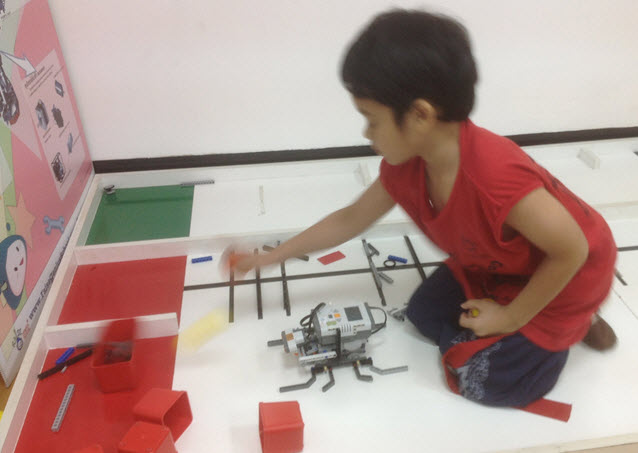
These images are retained from the original page as examples of published learning activities and programme information. Some contain Thai text or historical dates. They do not guarantee the same result for a new learner. Confirm current programmes with the team.
View original images


Frequently asked questions
Do hand skills stop developing at six?
No. The archive’s age examples are not a permanent deadline.
Does a small construction piece suit every child?
No. Follow product safety guidance and consider the learner’s needs.
Should a family ignore falls or pain?
No. Use suitable supervision and respond appropriately to injury or pain.
Contact and related pages
Tell the team about the learner or organisation, relevant experience and the intended learning purpose. Confirm the current programme, equipment, availability, schedule and fees before booking.
Contact Raise Genius School service overview
- Teacher Bung’s Memories and Ideas for a School Break
- Robotics, Cooking, Sport, Numbers, Languages and Clay
- An Archive Comparison with Weekend Learning
- Talking about Children’s Projects with Care
- Building, Testing, Troubleshooting and Explaining
- Keeping Space for Conversation, Movement and Making
- Making “A Little Longer” Clear and Manageable
- Build a Set, Make a New Model and Tell a Story
- A Moral Dilemma as a Conversation, Not a Test
Course-selection guide · Robotics portfolio projects · Competition preparation · Team advice and coaching · Course guide · General FAQ
Related services: School robotics camps · STEM activity stations
Related learning: Raise Maker Arduino · micro:bit robotics · IOTBot & AI · Portfolio preparation · Camp proposal · Accompanying teachers
Related reference: NAEYC: developmentally appropriate practice · CPSC: toy safety


