Benefits of Robotics Learning for Children
RAISE GENIUS · PARENTS & SCHOOLS
Benefits of Robotics Learning for Children
The benefits of robotics learning extend beyond assembling parts or entering commands. The original article emphasises a way of thinking: plan an action, observe a result, investigate a mistake and explain an improvement. These are opportunities to practise, rather than a promise that one course determines a child’s future.
Contact the teamOn this page
Benefits of robotics learning: four foundations developed through practical projects
Logical thinking begins with asking what should happen first, next and under which condition. A learner can compare that prediction with the robot’s actual behaviour.
Problem solving involves breaking a larger task into smaller actions. A robot that turns the wrong way creates a reason to inspect the build, connection or command and test a change.
Teamwork gives pupils a reason to share construction, programming and testing roles. The aim is for everyone to contribute, including a learner who may not immediately ask for a turn.
Confidence and communication grow through showing something the learner understands. Explaining what was changed can be as useful as presenting a finished robot. Individual progress varies.
A published learner story
The source recounts Chompoo, an early Raise Genius learner who began with LEGO construction, explored maker-style robotics activities and assembled a portfolio before entering KMUTT’s FIBO through a portfolio route.
The original school profile also describes fifteen years of activity, many learners and KMUTT business incubation. These are attributed school accounts; this translation does not independently verify every award, admission or historical affiliation.
A single learner’s story can illustrate a pathway, but it does not establish that another child will receive the same admission result. Each institution decides its own current eligibility and selection process.
Connections with careers and the wider community
The article connects practical technology learning with a changing world of work and Thailand’s digital-skills development. Its useful educational point is to help a child understand and create with technology, rather than only use a finished product.
The original places this discussion in a Thai digital-skills context, referring to EEC workforce development and DEPA Coding Thailand. Those examples do not establish a numerical forecast of a child’s job prospects ten or fifteen years ahead. Confirm current initiative details with the responsible organisation.
An interest in robotics may later connect with engineering, computing, design or other fields. Early exploration can help a learner discover an interest while mathematics, language and broader school learning continue alongside it.
Choose a first activity by readiness
The source’s Minecraft Education example begins from age six, with one to four learners per teacher. The broader programme description mentions a progression from age seven through secondary school. These examples refer to different activities; confirm the exact current course and readiness.
For a beginner, the article favours an enjoyable task with a visible result before a more demanding project. Older learners can discuss automation and presentation work when they have suitable foundations.
Ask the child to show one thing they made, explain a difficulty and describe a next idea. Confirm the currently offered programme, equipment, teaching arrangements and fees with the team.
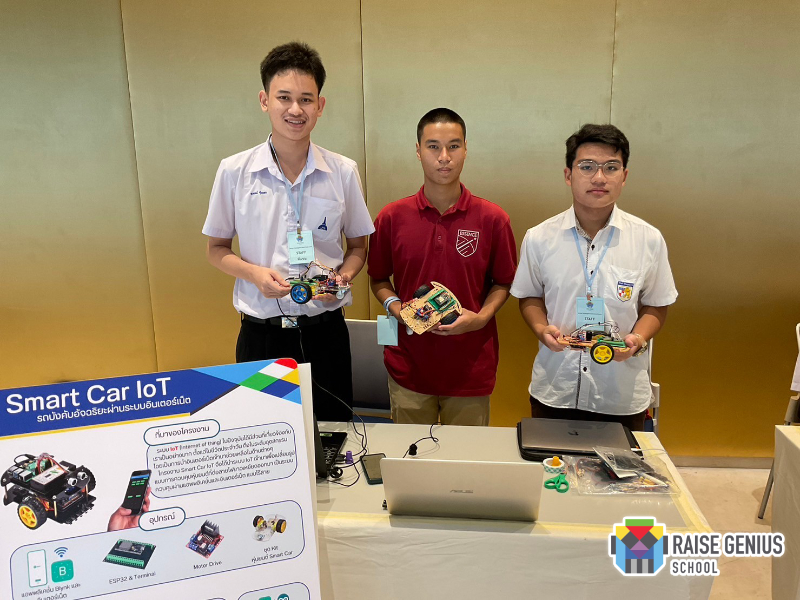
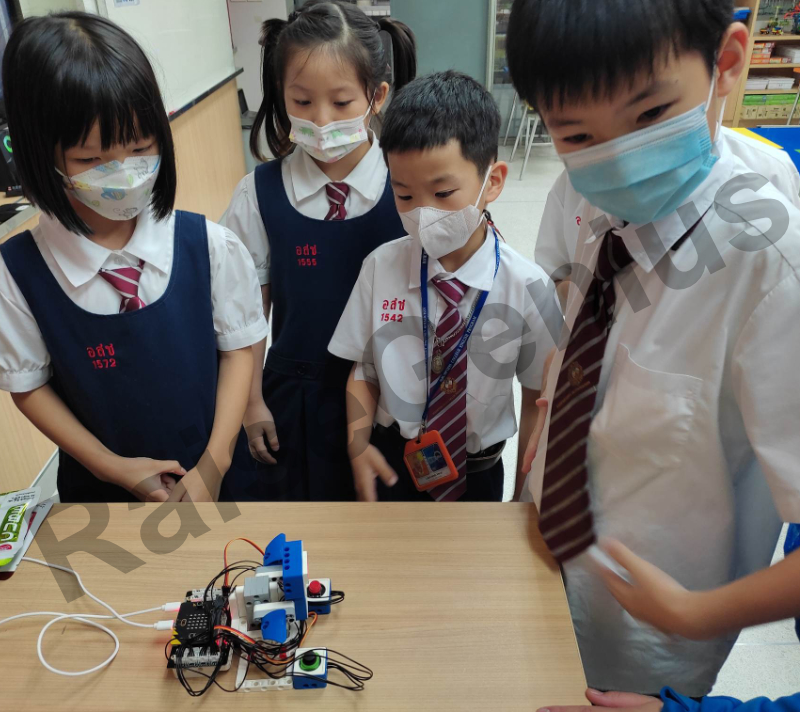
Original photographs and artwork
These images are retained from the original page as examples of published learning activities and programme information. Some contain Thai text or historical dates. They do not guarantee the same result for a new learner. Confirm current programmes with the team.
View original images
Frequently asked questions
Is robotics only for children who want to be engineers?
No. The source emphasises practising logical thinking, planning, testing, communication and collaboration. A learner can explore an interest without choosing a profession first.
Does early robotics guarantee university admission?
No. The published learner story is an individual school account. A project can document learning, while admissions depend on the institution’s current requirements and selection.
Where can a beginner start?
The article describes introductory Minecraft Education and later practical robotics pathways. Confirm the current course, readiness, equipment and an age-appropriate communication arrangement.
Contact and related pages
Tell the team about the learner or organisation, relevant experience and the intended learning purpose. Confirm the current programme, equipment, availability, schedule and fees before booking.
Contact Raise Genius School service overview
- Minecraft Education: First Coding Steps for Primary Learners
- When to Start a Robotics and AI Portfolio
- AI Learning for Children: Start with Coding Foundations
- Equipment, Curriculum and Training for a School Robotics Club
- Starting an AI or IoT Project for a Portfolio
- Choosing a Coding Course for Children: A Family Guide
- A Guide to School Robotics and STEM Camps
- Roblox Game Making or Minecraft Education: Where to Begin?
- Robotics Engineering Careers and a Changing AI Workplace
Course-selection guide · Robotics portfolio projects · Competition preparation · Team advice and coaching · Course guide · General FAQ
Related services: School robotics camps · STEM activity stations
Related learning: Raise Maker Arduino · micro:bit robotics · IOTBot & AI · Portfolio preparation · Camp proposal · Accompanying teachers
Related reference: IPST STEM resources (Thai)