Robotics for Small Schools with Limited Budgets
RAISE GENIUS · PARENTS & SCHOOLS
Robotics for Small Schools with Limited Budgets
Robotics for small schools does not have to start with an expensive permanent room. The source discusses schools with fewer than 200 pupils and four possible routes. The right choice depends on learning goals, available teachers, ongoing resources and the school’s actual budget.
Contact the teamOn this page
Four routes for robotics for small schools
A permanent robotics room has the greatest initial commitment in the source comparison: equipment, space and curriculum. It may support repeated use across year groups when the staffing and timetable are ready.
Training the school’s teachers combines preparation with usable kits. It develops internal capacity, while still requiring time for planning, equipment care and continued teaching.
Term-based subject or club teaching by an external team is another route named in the introduction. Confirm responsibilities and recurrent costs; the source does not provide a separate numerical price for it.
Occasional camps or workshops require a shorter commitment and can help pupils try an activity. Continued learning needs another planned opportunity after the event.
Compare costs on the same basis
The original introduction lists four routes, while a later heading/table develops three in detail. This English version keeps all four named routes and does not invent a missing price row.
Compare initial investment, recurrent obligations, teacher/space readiness and the ability to continue over several years. Labels such as lower or higher cost are relative source comparisons, not current quotations.
The source references the Equitable Education Fund’s discussion of small-school resource inequality. A school’s actual circumstances are more useful than choosing the option that looks strongest in an abstract ranking.
Published examples and age stages
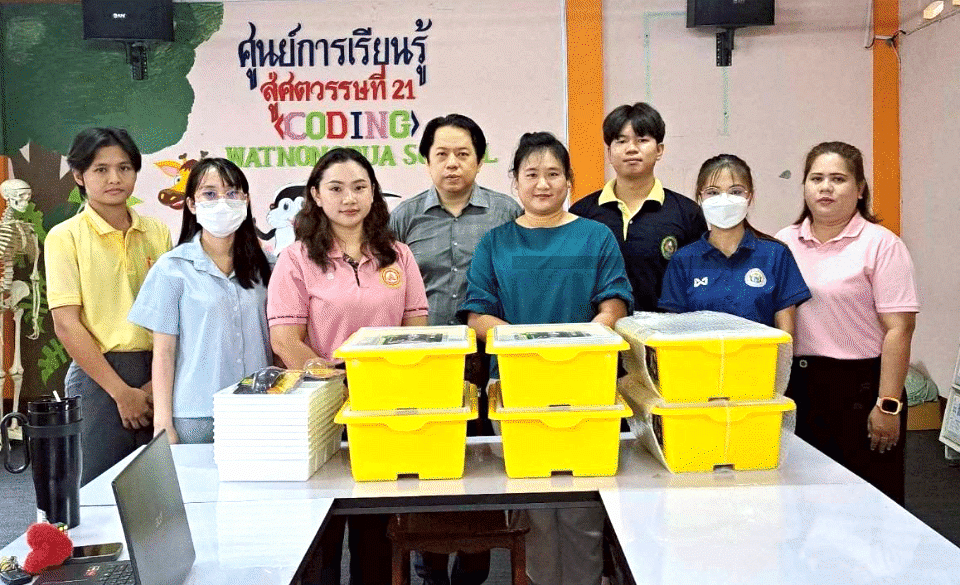
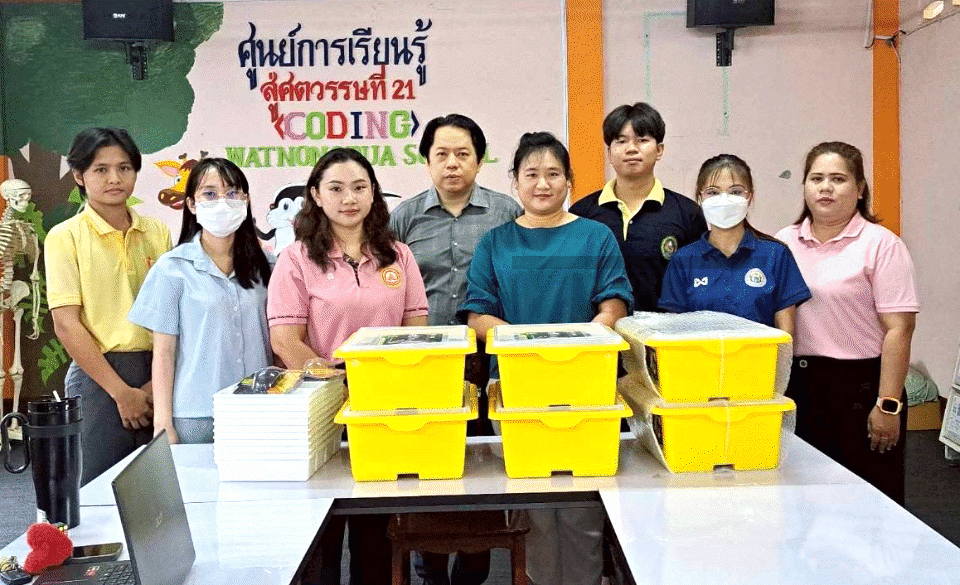
The permanent-room example describes design around space/budget, a STEM robotics curriculum for Thai, bilingual and international settings, and 3D learning resources associated in the source with earlier NIA support.
The teacher-training example gives two full days and no more than six participants. The camp example gives thirty to one thousand pupils, Years 1-9, and one-day or three-consecutive-day arrangements. Confirm the proposed groups, rotations, staffing and venue; these are not a capacity promise for one undivided classroom.
Other articles describe different camp sizes or stages. Each is a separate source example, so ask for a current scoped proposal rather than combining all maximums.
The source suggests teacher-led play/construction for kindergarten, introductory camps for lower primary, more continuous learning for interested upper-primary pupils, and sustained projects for lower secondary. These are planning ideas, not compulsory purchases by age.
Signs the school is ready to invest further
Pupils ask for further lessons, the school regularly presents STEM work, at least one teacher wants to develop the subject, and funding becomes more predictable. These are the source’s signs to discuss, not automatic conditions for success.
Start with a feasible route and review participation before expanding. A small pilot should still have a learning purpose and a way to see what pupils can explain or make.
Use the related English school-service, teacher-training, camp, lab-design and curriculum articles to prepare an enquiry. Confirm scope, costs, resources and follow-up rather than assume a fixed package.
Original photographs and artwork
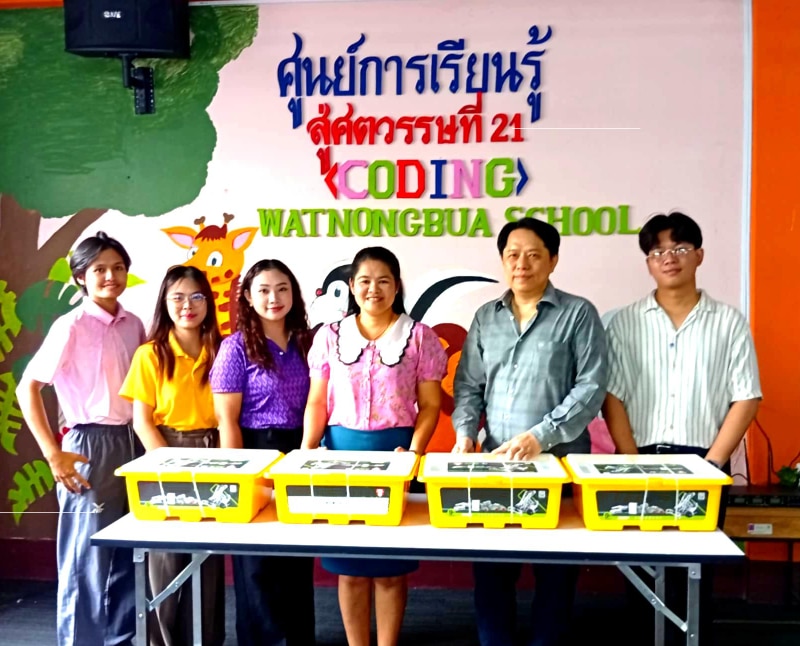
These images are retained from the original page as examples of published learning activities and programme information. Some contain Thai text or historical dates. They do not guarantee the same result for a new learner. Confirm current programmes with the team.
View original images
Frequently asked questions
Does a small school need a permanent robotics lab first?
No. The source includes teacher training, term-based teaching and occasional camps as alternatives. Choose around the school’s goals, staffing, equipment and resources.
Are there three options or four?
The introduction names four, but the later comparison develops three. This version distinguishes all four named routes without inventing a price or detailed package for the less-developed term-based option.
Are the published camp numbers a guarantee?
No. The source example mentions from thirty to one thousand pupils across a planned event format, not one classroom group. Confirm current age stages, rotations, staffing, space and scope in a proposal.
What suggests a school can expand?
The source points to pupil demand, regular STEM presentation needs, interested teachers and more predictable funding. Review a pilot and the resources needed to sustain learning before investing further.
Contact and related pages
Tell the team about the learner or organisation, relevant experience and the intended learning purpose. Confirm the current programme, equipment, availability, schedule and fees before booking.
Contact Raise Genius School service overview
- Computer Specs for Children’s Coding Lessons
- How Much Parent Support Does Online Coding Need?
- Choosing Online Coding for Kids by Age & Readiness
- Online Robotics Learning When No Class Is Nearby
- Choosing Robotics Teacher Training for Your School
- Planning School STEM Robotics Camps & Budgets
- Starting a School Robotics Classroom: People Before Kits
- Primary Computing Lessons: From Mechanisms to Code
- Helping a Child Become a Programmer: Build Foundations
Course-selection guide · Robotics portfolio projects · Competition preparation · Team advice and coaching · Course guide · General FAQ
Related services: School robotics camps · STEM activity stations
Related reference: Equitable Education Fund: small-school resource context