Starting a School Robotics Classroom: People Before Kits
RAISE GENIUS · PARENTS & SCHOOLS
Starting a School Robotics Classroom: People Before Kits
Starting a school robotics classroom begins with a curriculum and people who can teach it, rather than buying boxes of equipment first. The source proposes deciding where lessons fit, choosing appropriate tools, preparing teachers and arranging the space around the pupils attending each session.
Contact the teamOn this page
Four steps for starting a school robotics classroom
1. Timetable. Decide whether robotics belongs in a computing subject or a club/after-school activity. A subject can reach a whole year group; a club offers a different audience and flexibility.
2. Tools and readiness. Discuss equipment that is approachable, quick to build and dismantle, and able to make construction and control visible within the intended lesson sequence.
3. Teachers. Let teachers work through the tasks pupils will attempt, including likely difficulties. Confidence comes from practice and a teaching plan, not only a theory presentation.
4. Simultaneous pupils. Calculate resources from the group in one lesson, not the total roll of every class in the year. The source describes two-four pupils per kit as a planning example.
Plan for continuity in starting a school robotics classroom
The article recommends preparing at least three-four teachers or more so the programme does not depend on one person who may later move schools.
Keep plans and resources as school assets that another teacher can use. Explain how lessons fit the school timetable and which goals teachers will assess.
The source estimates that many schools can prepare within roughly one term when following a suitable sequence. Treat that as an indicative experience statement, not a guaranteed installation deadline for a new project.
An existing room may be a useful starting point
The practical list includes tables that keep small pieces from rolling away, adequate electrical outlets, lockable storage and a clear area for robot trials.
A rearranged activity room may be usable; the article does not require an expensive decorative fit-out. Suitability still depends on the school’s actual room and proposed activities.
An introductory STEM activity-station event is presented as a lighter way for teachers and leaders to see participation before deciding on a permanent setup. Confirm the scope rather than assume an event is included with a lab.
School examples and enquiry preparation
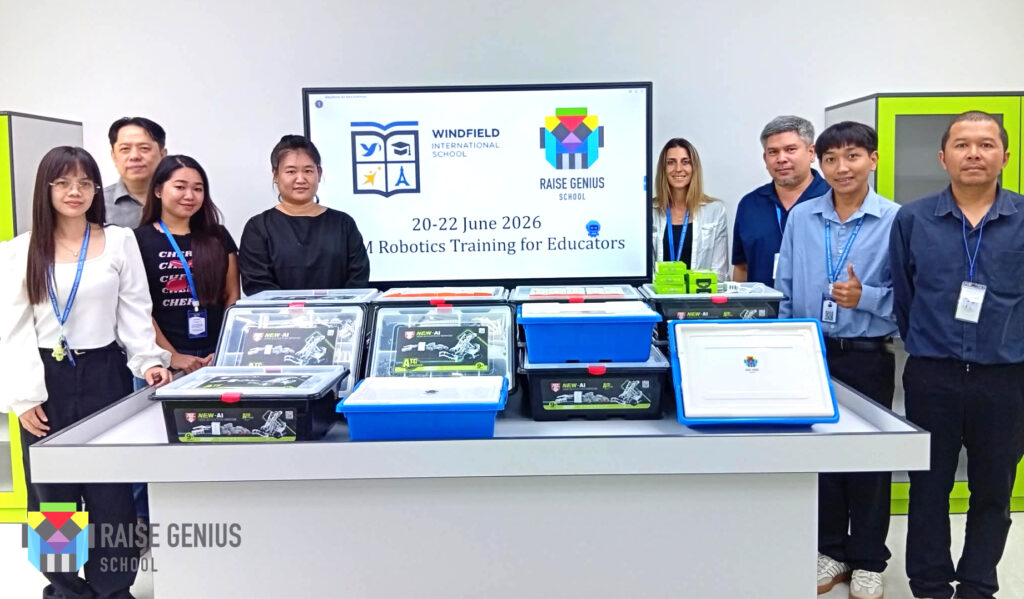
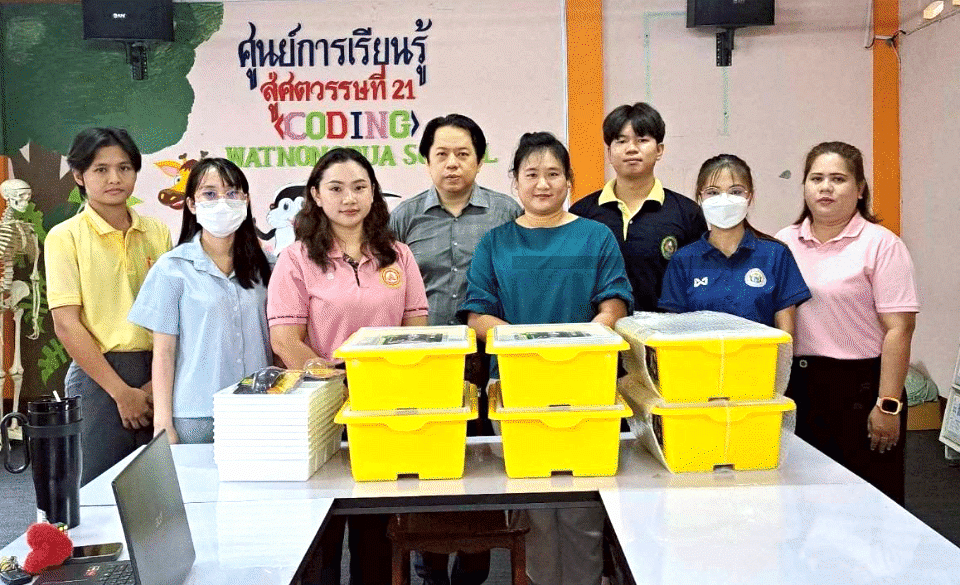
The source cites international-school work in Samui/Chiang Mai, a Bangkok demonstration school, Narabut School in Phichit and Wat Nong Bua School. It also describes a fifteen-year school-team history. These remain school accounts requiring current confirmation before use as procurement references.
When starting a school robotics classroom, share year groups, pupils per session, the intended subject/club, existing kits and teachers’ experience. Ask for curriculum, equipment, installation, training and support to be specified.
The English lab-design, curriculum, teacher-training and small-school guides provide related questions. The aim is a room with regular learning activity, supported by staff and plans, rather than equipment left unused.
Original photographs and artwork
These images are retained from the original page as examples of published learning activities and programme information. Some contain Thai text or historical dates. They do not guarantee the same result for a new learner. Confirm current programmes with the team.
View original images
Frequently asked questions
What should come before buying kits?
The source prioritises curriculum goals, a teaching plan and teacher preparation, followed by equipment and space suited to the timetable and pupils.
How many kits should a school calculate?
Start with pupils attending simultaneously, not the entire school roll. The source gives groups of two-four pupils per kit as a planning example; confirm the actual arrangement.
How long does preparation take?
The article suggests roughly one term for many schools in its experience. This is indicative, not a promise for every school; staffing, scope and readiness affect the timeline.
What helps the programme survive staff changes?
The source suggests preparing at least three-four teachers and retaining lesson plans as school resources so continuity does not depend on one person.
Contact and related pages
Tell the team about the learner or organisation, relevant experience and the intended learning purpose. Confirm the current programme, equipment, availability, schedule and fees before booking.
Contact Raise Genius School service overview
- Computer Specs for Children’s Coding Lessons
- How Much Parent Support Does Online Coding Need?
- Choosing Online Coding for Kids by Age & Readiness
- Online Robotics Learning When No Class Is Nearby
- Robotics for Small Schools with Limited Budgets
- Choosing Robotics Teacher Training for Your School
- Planning School STEM Robotics Camps & Budgets
- Primary Computing Lessons: From Mechanisms to Code
- Helping a Child Become a Programmer: Build Foundations
Course-selection guide · Robotics portfolio projects · Competition preparation · Team advice and coaching · Course guide · General FAQ
Related services: School robotics camps · STEM activity stations
Related reference: IPST computing-education resources (Thai)