
Course information: Raise Maker course (automation with Arduino robots): standard fee THB 9,900 for 14 two-hour lessons (28 hours). Seasonal offers may be available; ask for the current price. | Raise Genius School has taught over 12,530 children over 15 years.
Learn Arduino and automation through practical projects
Explore electronics, programming and hardware, then develop a robot or automation project that interests you. Record your process and results for a portfolio.
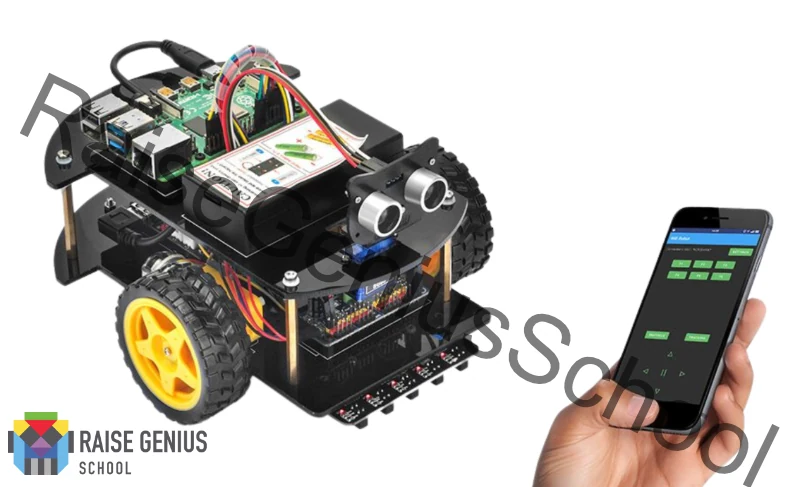
Raise Maker Course: learn automation fundamentals with Arduino
Arduino, C++ and IoT course
Learn automation through projects that interest you. Keep a record of your process and work for a portfolio supporting applications to related university programmes.


Projects: from foundations to robots and automation
Begin with Study to understand boards, circuits and programming. Progress to Learning, where you build, test, solve problems and explain your own work.
Explore electronics, programming and hardware through experiments, developing Arduino robotics and automation projects from simple challenges to more complex work.
Two stages of learning
- Study — Build the foundations: Understand electronic boards, programming and hardware to prepare for projects and independent research.
- Learning — Put ideas into practice: Build and test real projects with teachers who guide, encourage and help solve problems.
Learning objectives
- Develop the ability to create robotics and automation projects of increasing complexity.
- Learn to research and construct your own understanding.
- Encourage independent exploration of electronics, programming and hardware foundations.
- Build confidence.
- Develop a positive attitude towards creative and innovative work.
- Practise persistence, willingness to experiment and understanding how experiments work.
- Develop a maker mindset for future hobby, business or competition projects.
- Collect project evidence for a portfolio supporting the next stage of study.
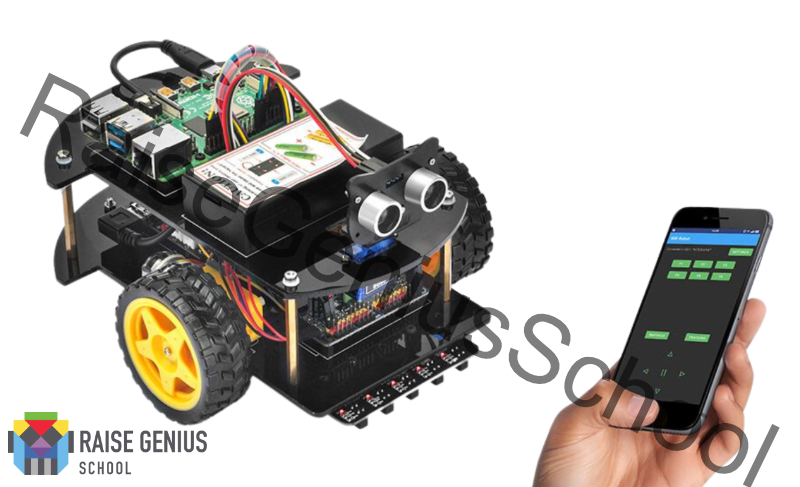
Who is this course for?
Upper secondary students interested in robotics and automation engineering or portfolio projects for university applications. Motivated lower secondary students with suitable foundations can also discuss a starting point with the teachers.
Teaching team highlights
- Teaching is overseen by an engineer with a master’s degree in robotics from FIBO at King Mongkut’s University of Technology Thonburi (KMUTT), adapting the depth of study to the learner’s readiness.
- Learn from robotics and automation teachers with practical project and teaching experience.
- Teachers can share practical experience and suggest pathways to more advanced study.
- Small groups support individual questions, practical work and sustained learning.
- Teaching allows time to understand and experiment, recognising that each learner has a different starting point and learning pace.
- Prepare to develop further as a maker and innovator.
Depending on the project, teachers advise on sourcing learning materials or purchase and send them to learners.
- Arduino boards and IoT
- Raspberry Pi Board
- Motor, Sensor, Electronic Device, Frame
Programming Language
- C ,
- Python
- Graphic Programming
Learner foundations
- Comfortable using a computer.
- A reasonably capable computer and a reliable high speed internet connection.
Ways to apply your learning
- Develop projects for secondary school and vocational study.
- Build foundations for exploring the Internet of Things.
- Prepare for further programming study, including C and other languages.
- Explore interests in robotics, computer engineering, games, multimedia and related fields.
- Develop other projects that interest you.
Course length and class times
14 two-hour lessons, totalling 28 hours. Develop automation projects through ongoing learning. Regular attendance supports project progress. Confirm the current start date and available class times with the teacher before enrolling.
Learners per class: Small-group classes; ask about places available in the current group.
Equipment to prepare
- Note Book
- Reliable high speed internet.
Learning location
Live online classes in small groups, with an emphasis on practical work.
Student projects and presentations
Explore photographs of projects, exhibitions and presentations below, including Maker Faire Bangkok and the Mini Conference. These examples document past activities.
Examples of past student work

The Kids Robot Lost in RGB team
and the Arm for Egg Roll team presented their projects at Maker Faire Bangkok 2020.
The teams included upper and lower secondary learners from Raise Robot Maker.
Photographs from the exhibition

Student voices
Phum (Grade 11 student)
★★★★★
“At Raise Maker Course I learned to build robots in depth. The teachers explain clearly and encourage us to keep working until we succeed. I intend to apply to study robotics engineering.”
Jang (Grade 10 student)
★★★★★
“The course is taught by an engineer with a master’s degree in robotics. This gives me confidence in the depth and accuracy of what I learn. Working on projects with my teammates is also very enjoyable.”
Noey (Grade 9 student)
★★★★★
“In a small group, I can always ask the teacher questions without feeling shy. I can understand things gradually without being rushed. I really enjoy learning here.”
Projects connecting learning to practical applications
The Raise Robot Maker egg-roll team combined MBlock and Dobot robots to help prepare egg rolls. Raise Genius School encourages makers to explore practical uses for their projects and connect robotics learning to everyday life.

The Kids Robot Lost in RGB project combines robotics, locomotion, path planning and image processing. It is a challenging project developed through sustained research, experimentation and study.

A learner connects signal wires between an Arduino controller and a motor for an automation project.

Learners write programs and test projects with close teacher guidance.
YouTube: an introduction to Raise Genius School’s programming learning pathway, filmed at the third Raise LEGO Robot activity at TK Park, CentralWorld, on 21 May 2017.
YouTube: P and Mickey present game programming projects developed at Raise Genius School after at least four to five years of learning. Presentations provide observable evidence of progress while sharing knowledge and inspiring other learners.
Mini Conference
The Raise Mini Conference for the Advanced Robot class took place at Bangkok City Library near Khok Wua intersection. Learners presented their projects and learning and collected photographs for their portfolios. Explore photographs from the event below.


Prae, Nat and Noey present their projects and learning.

Thong presents a project and learning outcomes.
Teachers: Teacher Num and the robotics engineering team
Education
- Bachelor’s degree: Mechatronic & Robotic Systems — Southeast Asia University
- Master’s degree: Robotics Engineering — Institute of Field Robotics (FIBO), KMUTT
Experience
- Over 14 years teaching robotics and automation to children.
- Over eight years working in IoT and industrial automation.
- Training provided to more than 50 teachers in Thailand.
- Robotics competition judge at regional and national levels for Thailand’s Office of the Basic Education Commission.
“At Raise Maker Course, we believe Thai children should understand automation through building and experimenting as well as theory. These skills matter in practical industrial work.”
— Teacher Num, co-founder of Raise Genius School
Student Testimonials
Translated from the original student testimonials. These accounts describe individual experiences at the time; they do not guarantee admission or the same outcome for another learner.
Plai (described in the original testimonial as a first-year student at King Mongkut’s Institute of Technology Ladkrabang)
★★★★★
“At Raise Maker Course, I learned the electronics and coding foundations that helped me build projects for my portfolio. I have been admitted to Robotics and AI at Ladkrabang. I am now studying Raise Advance Coding with Teacher Nott because the first two years involve a lot of coding. Thank you.”
Ohm (admitted through a recruitment programme to Artificial Intelligence Systems Engineering at KMUTT, Ratchaburi campus)
★★★★★
“Thank you, Teacher Bung, for helping me prepare my portfolio and practise for the interview. I plan to continue with Advance Coding.”
Alpha (studied with Raise Genius from Primary 4 to Grade 12 and was admitted to ISE, Chulalongkorn University)
★★★★★
“Thank you to all the teachers for guiding me at each step. I started with LEGO Robot, moved to online lessons and continued through Advance Coding.”
Enrol or ask for advice
THB 9,900 · 14 lessons · Two hours each Share the learner’s age, coding experience, project goals and available equipment so teachers can suggest a suitable starting point. Ask about the start date, class size and equipment costs before enrolling.
Plan your learning with a teacher →
For more information Contact Us
Teacher Num
RaiseGeniusSchool profile → AboutUs
Raise Genius School has received support through the technology SME agency (UTO) under the University Business Incubator (UBI) programme at KMUTT.
Raise Genius School has received innovation support from the National Innovation Agency (NIA)
Raise Genius School has received franchise recognition from the Department of Business Development, Ministry of Commerce (DBD)
Frequently asked questions
Who is Raise Maker Course for?
The course is for upper secondary students interested in robotics and automation projects, including work for a portfolio. Motivated lower secondary learners with suitable foundations can ask teachers to assess a starting point.
What will I study?
Study Arduino, electronics, programming and hardware foundations, then apply them to a robotics or automation project. Teachers guide building, experimentation, troubleshooting and explaining your work.
How long is the course and what does it cost?
The published course includes 14 two-hour lessons, totalling 28 hours, with a standard fee of THB 9,900. Confirm current prices, any offers and the equipment budget with the teaching team.
How do online classes and equipment arrangements work?
Classes are live online in small groups. Learners need a suitable computer and reliable internet. Depending on the project, teachers advise on sourcing components or purchase and send them. Ask about current class size and start dates.
Does the course guarantee university admission?
No. The course supports project development and collecting evidence of the learner’s own process and results. Admissions depend on each institution’s criteria and the quality of the application. Keep an honest record of your contribution and discuss deadlines with the teacher.