
What Is STEM? Connect Four Areas through Practical Work
RAISE GENIUS · PARENTS & SCHOOLS
What Is STEM? Connect Four Areas through Practical Work
Understanding STEM learning starts with four connected areas: science, technology, engineering and mathematics. This archive article relates them to invention and suggests practical robot construction as one way for children to investigate those connections.
Contact the teamOn this page
Understanding STEM learning: four areas, not five
Science can help explain an observation, technology can provide tools, engineering can connect a problem with a design, and mathematics can support measurement and reasoning. An activity may draw on several of these areas together.
The Thai source lists the four letters correctly but later refers to five areas. This English edition consistently uses four. Its old forecast about STEM employment in 2018 is historical, not a current labour-market figure.
School subjects and practical activity
The source notes that pupils already meet relevant subjects at school. STEM is not a reason to assume that every family must buy an additional class or a particular book.
An additional activity can be considered when a learner wants more opportunity to investigate a subject or make something. Ask how the task connects the ideas rather than rely on a label.
The construction example in the archive
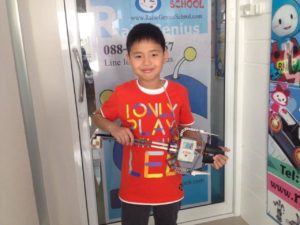
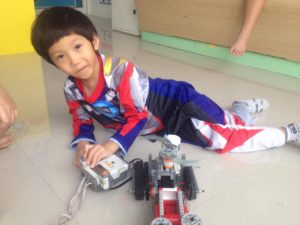
Raise Genius describes children building LEGO robot models with teacher guidance and trying the results with classmates. A design can create reasons to think about a mechanism, a program, a measurement or a test.
Understanding STEM learning includes explaining those connections. Ask what was attempted, what happened and what the learner changed, as well as looking at the finished model.
The original photographs remain as historical activity examples. They do not guarantee that every kit or model is part of the current programme.
Choose an activity using the learner’s question
Begin with something the child would like to understand or make, then discuss the equipment, prerequisites, teacher support and intended learning goals.
The archive invites families to ask about a free trial. Confirm the current trial arrangements, availability, timetable and fees before booking. A STEM activity is an opportunity to practise, not a guaranteed academic or career outcome.
Original photographs and artwork
These images are retained from the original page as examples of published learning activities and programme information. Some contain Thai text or historical dates. They do not guarantee the same result for a new learner. Confirm current programmes with the team.
View original images
Frequently asked questions
What are the four areas in understanding STEM learning?
Science, technology, engineering and mathematics. A practical task can connect more than one of these areas.
Does STEM mean every child needs extra tuition?
No. The article recognises relevant learning at school. Additional activities can be considered for a particular interest or learning purpose.
Is the employment forecast in the archive current?
No. It refers to 2018. This edition does not present it as a current statistic or a promise of future jobs.
Contact and related pages
Tell the team about the learner or organisation, relevant experience and the intended learning purpose. Confirm the current programme, equipment, availability, schedule and fees before booking.
Contact Raise Genius School service overview
- Imagination or Knowledge? Give Children Room to Develop Both
- Balancing Academic Study and Activities Children Enjoy
- Practising Patience through Making and Play
- Let Children Try, Make Mistakes and Keep Creating
- Connect Creative Ideas with Analytical Thinking
- Make, Explain and Share: Confidence through Construction
- When a Child Keeps Delaying: Discuss the Task First
- What Could a Child Learn during the School Holidays?
- Family Support and School Learning Can Work Together
Course-selection guide · Robotics portfolio projects · Competition preparation · Team advice and coaching · Course guide · General FAQ
Related services: School robotics camps · STEM activity stations
Related learning: Raise Maker Arduino · micro:bit robotics · IOTBot & AI · Portfolio preparation · Camp proposal · Accompanying teachers
Related reference: IPST STEM education resources
