Preparing a Portfolio for Robotics, Mechatronics or AI Admissions
RAISE GENIUS · PARENTS & SCHOOLS
Preparing a Portfolio for Robotics, Mechatronics or AI Admissions
A robotics admissions portfolio should help a reader understand what you have actually built, programmed and learned. The Thai article groups preparation into practical projects, competitions or activities, and a presentation matched to the intended programme. It encourages a continuing record of work rather than a hurried collection just before applying.
Contact the teamOn this page
Robotics admissions portfolio: four useful components
Introduce your interests and strengths clearly. A brief account of how an interest developed can connect the projects that follow, without requiring a long personal statement about every activity you have ever tried.
Include projects you genuinely helped build or code. Photographs and short videos can support an explanation of the problem, the work you completed and what you learned. Describe your own contribution when the project was completed by a team.
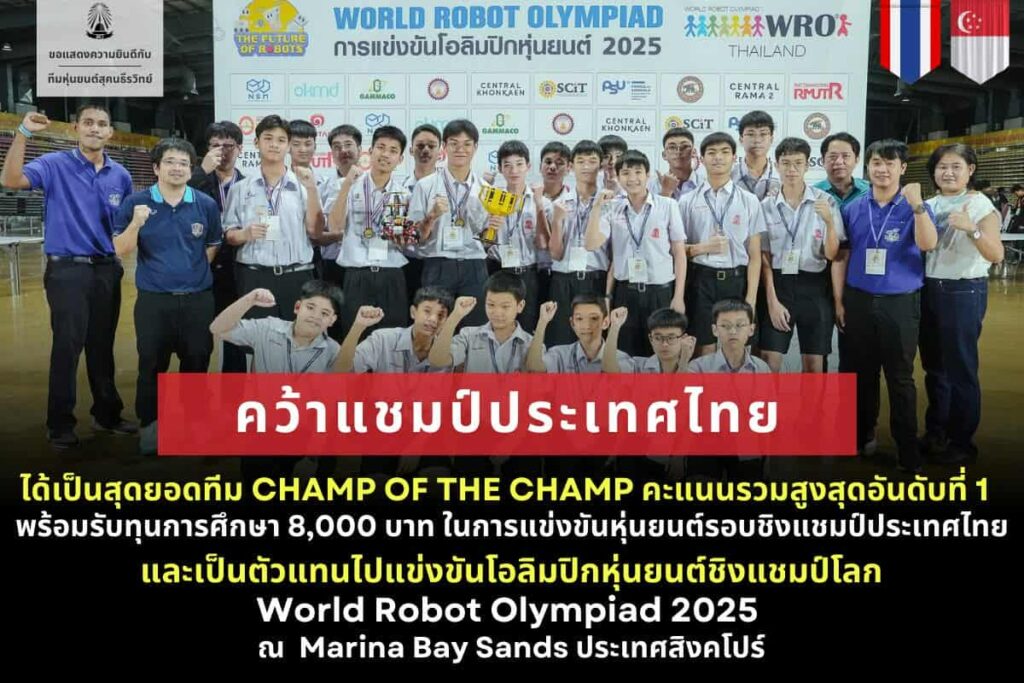
Record competitions and other relevant activities. The article says that participation can be worth explaining even without a championship. Present the actual result and the learning involved; an activity certificate should not imply a prize you did not receive.
Select and organise the material for the destination programme. An AI-focused programme and a mechanically focused programme may look for different evidence. Read the official criteria before deciding which projects deserve the most space.
Begin a record before the application deadline
The article recommends exploring real coding and robotics projects from lower secondary school, then selecting the strongest evidence during upper secondary school. Starting early provides time to try, improve and discover which work you enjoy.
This is a preparation approach, not a universal admissions requirement to have several years of projects. A later starter should use the time available honestly and follow the programme’s actual rules rather than manufacture an earlier history.
Look up the institution’s current announcement and the official myTCAS information. Portfolio formats, eligibility, deadlines and selection procedures are set for particular programmes and rounds; a course provider cannot replace those announcements.
Published course examples for project work
The source lists Raise IOTBot & AI for Internet of Things and AI projects at THB 9,900, Entrepreneurial Maker for automation and business-style presentations at THB 15,900, and Unity3D Game Maker for coding projects at THB 9,900.
It also mentions FLL and WRO team preparation as a route to practical competition experience. These are published examples and source prices, not a current quotation or a promise that taking a course will satisfy a particular university.
Ask the team which project is appropriate for your experience, what you will personally do, which equipment is included, and what presentation practice is offered. Confirm current availability, fees and prerequisites before booking.
Learner stories and an honest next step
The school article recounts alumni entering engineering programmes, including KMUTT’s FIBO through a portfolio route. It also describes Alpha’s admission to Chulalongkorn University’s ISE, a fifth-place ranking and a full scholarship. These are attributed school accounts of individual outcomes.
An individual success does not guarantee another applicant’s admission, rank or scholarship. Use such stories to discuss preparation and evidence, while keeping the decision with the university.
When planning a robotics admissions portfolio, begin with an inventory of your own work and the published requirements of the programme you hope to enter. The aim is to explain your interests and contribution accurately, then identify a realistic next project.
Original photographs and artwork
These images are retained from the original page as examples of published learning activities and programme information. Some contain Thai text or historical dates. They do not guarantee the same result for a new learner. Confirm current programmes with the team.
View original images

Frequently asked questions
What belongs in a robotics admissions portfolio?
The article recommends a clear personal introduction, genuine practical projects, relevant activity or competition evidence, and a presentation matched to the destination programme’s requirements.
Must every project win a prize?
No. The article includes participation and learning as useful evidence. Describe the result accurately and explain your own contribution; each institution decides what it accepts.
Are the course fees listed here current?
They are figures from the source article. Confirm current fees, equipment, prerequisites and availability with the school before booking.
Does a course guarantee university admission?
No. Admission, ranking and scholarships depend on the institution’s current criteria and selection process. Published learner stories are individual examples.
Contact and related pages
Tell the team about the learner or organisation, relevant experience and the intended learning purpose. Confirm the current programme, equipment, availability, schedule and fees before booking.
Contact Raise Genius School service overview
- Preparing Teachers to Start a School Robotics Subject or Club
- Why Online Learning Can Be Difficult, and What to Discuss
- Why a University Portfolio Starts with Knowing Yourself
- Learning with Fun, Challenge and Useful Skills
- Project Based Learning: Connecting a Goal with Real Work
- Flipped Classroom Learning: Prepare, Ask and Apply
- More than a Robot: Making, Thinking and Working Together
- Girls Learning Robotics: Two Stories of Participation
- Why Children Learn about Technology and STEM
Course-selection guide · Robotics portfolio projects · Competition preparation · Team advice and coaching · Course guide · General FAQ
Related services: School robotics camps · STEM activity stations
Related learning: Raise Maker Arduino · micro:bit robotics · IOTBot & AI · Portfolio preparation · Camp proposal · Accompanying teachers
Related reference: Official myTCAS admissions information