Writing a School Robotics Camp Proposal
RAISE GENIUS · PARENTS & SCHOOLS
Writing a School Robotics Camp Proposal
A robotics camp proposal works best when its purpose, activities, budget and evaluation describe the same event. The source organises the task around six questions: what will happen, why it matters, what it should achieve, how it will run, what it will cost and how the result will be assessed. Approval remains the school’s own decision.
Contact the teamOn this page
Six questions for a robotics camp proposal
What: give the activity and intended learners in a clear project title. Identify the school year or group so the reader can understand who the event serves.
Why: explain the school’s need and connect it to a relevant plan or decision. Avoid copying a previous project’s wording if the actual problem and learners have changed.
What result: state a small number of learning objectives that the proposed activities can support. The source cites project-writing guidance favouring one to three main objectives.
How: describe the activity sequence, timing, grouping and responsibilities. A line saying only “one-day robotics camp” does not explain what pupils will actually do.
How much: use an agreed quotation and a realistic itemised budget. Distinguish the provider’s fee from food, venue or other school responsibilities.
How to assess: choose evidence that can be collected during the event and compared with the intended objectives. Attendance, group work and short explanations are different kinds of evidence.
A three-part rationale for the robotics camp proposal
Begin with context, such as the school’s learner-development plan or an academic-team decision. Use the school’s actual document or agreed priority rather than invent a policy reference.
Describe the specific gap. The source example is upper-primary pupils who have studied computing but have not used physical robotics equipment because the school has no kit. Replace that example with facts about the intended group.
Explain why the timing matters. For example, a group may be approaching the end of primary school without a practical STEM activity. Avoid claiming that an event is legally required or guaranteed funding when the school has not established that.
The source draws on project-writing guidance from Valaya Alongkorn Rajabhat University’s planning division. This is a planning framework, not a guarantee that a particular school or funding body will approve the document.
Select objectives for a robotics camp proposal
The original camp aims include applying science through practical challenges; encouraging imagination and inquiry; connecting science, engineering, mathematics and computing; working and analysing in groups; and building a positive attitude towards STEM.
Select one to three objectives that match the main activities instead of copying every possible aim. If the event mainly involves constructing and testing a robot, say how pupils will demonstrate those actions.
Keep the same learner numbers and year groups throughout the proposal, quotation request, activity table and final report. A mismatch makes even a well-written document difficult to review.
A seven-step activity sequence for a robotics camp proposal
1. Introduce instructors and divide pupils into small groups. 2. Introduce robotics and examples of practical uses. 3. Run an appropriate recreational activity to prepare the group.
4. Explore robotics and automation games. 5. Build a robot. 6. Take part in an internal camp challenge. 7. Present awards where agreed and review what was learned.
The source describes a full activity day as around six hours, with multi-day options agreed with the school. Convert the sequence into actual time slots, including the school’s breaks and transition needs, rather than infer a fixed timetable from a list.
For rotating stations, the published planning examples give about thirty to seventy pupils per station and ninety to one hundred and twenty minutes per round. They describe roughly one hundred and twenty to three hundred participants in a day under an appropriate design. Capacity depends on station count and scheduling; these numbers are not one universal formula.
Budget and responsibilities in a robotics camp proposal
The original describes the team bringing robots, mission areas and teaching media. The school supplies a suitable venue and accompanying teachers. Obtain the exact scope in the quotation so that assumptions about equipment, transport or support do not become unexpected costs.
The source gives a broad range from camps beginning around thirty pupils to larger station events reaching up to one thousand across an appropriate arrangement. That does not mean one instructor or one station can serve the whole number simultaneously.
List the provider’s quoted fee and any food, refreshments or other agreed expenses separately. Identify the venue, pupil numbers by year group, preferred dates and the school’s staffing availability when requesting a proposal.
The source mentions enclosed meeting rooms, computer rooms or activity rooms as possible venues and multi-day arrangements such as Tuesday–Thursday or Tuesday–Friday. Confirm practical suitability and the actual offered dates rather than treat these as a current booking promise.
Evaluation evidence for a robotics camp proposal
Compare actual attendance with the target and record the robots or tasks completed by small groups. Ask a simple question about what a group changed after a test if that matches the intended learning objective.
The article mentions activity photographs supplied after the event. Agree the deliverables and the school’s photography arrangements in advance. A photograph documents participation; it does not by itself establish that every learning objective was met.
Set a realistic method and responsible person for each measure. For example, an attendance sheet can answer how many pupils joined, while a brief task record can describe what was made. Keep any target percentage consistent with school approval rather than invent it as a provider guarantee.
Before submission, compare the title, rationale, objectives, activity table, budget and evidence once more. Ask whether another teacher could understand the event from the document without relying on a separate verbal explanation.
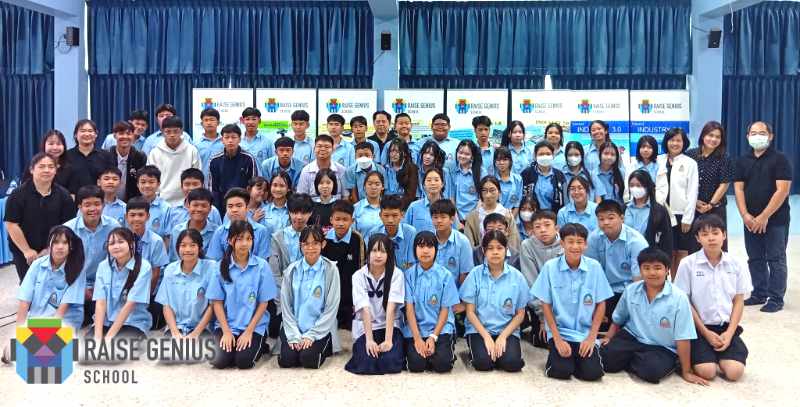
Original photographs and artwork
These images are retained from the original page as examples of published learning activities and programme information. Some contain Thai text or historical dates. They do not guarantee the same result for a new learner. Confirm current programmes with the team.
View original images


Frequently asked questions
How early should the robotics camp proposal be submitted?
Follow the school’s budget and approval calendar. The source recommends obtaining a quotation before the review meeting, after sharing pupil numbers, year groups and preferred dates.
Can one proposal cover several year groups?
Yes, if the groups, age-appropriate activities and morning/afternoon or multi-day rounds are clearly identified. Agree the schedule and supervision with the team.
What can change when the budget is limited?
Discuss fewer days or a suitable rotating-station format before simply excluding pupils. Compare the learning time and supervision each option provides and obtain a revised quotation.
Contact and related pages
Tell the team about the learner or organisation, relevant experience and the intended learning purpose. Confirm the current programme, equipment, availability, schedule and fees before booking.
Contact Raise Genius School service overview
- Entrepreneurial Maker Course: Automation & Presentation
- Online EV3 Programming Lessons: Original Video Archive
- LEGO Robotics for Kids: Build, Program & Present
- Scratch or Python for Kids: Choosing a Starting Point
- From Playing Games to Coding with Minecraft & Roblox
- Starting Coding and AI: An Age & Readiness Guide
- Learning Robotics When Maths Is Difficult
- Preparing a Robotics Engineering Portfolio
- Teacher Support for School STEM Activity Stations
Course-selection guide · Robotics portfolio projects · Competition preparation · Team advice and coaching · Course guide · General FAQ
Related services: School robotics camps · STEM activity stations
Related reference: VRU planning division: project-writing guidance