
Kind, Clear and Supportive Communication with Learners
RAISE GENIUS · PARENTS & SCHOOLS
Kind, Clear and Supportive Communication with Learners
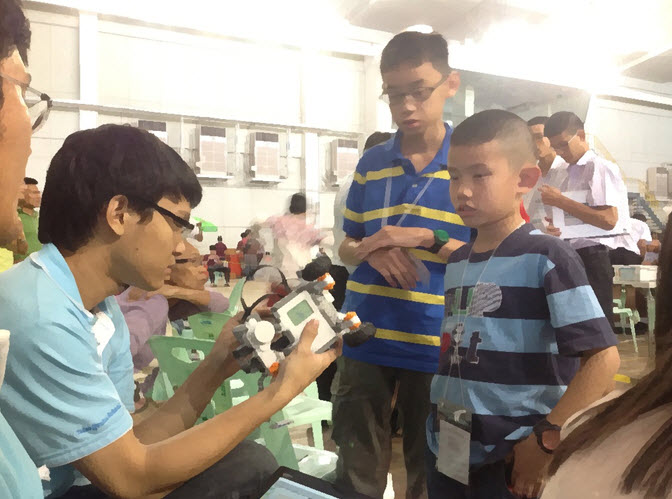
Supportive robotics teaching is the focus of Teacher Bung’s archive article. It values a child becoming more independent while receiving help when a task exceeds their current ability.
Contact the teamOn this page
Supportive robotics teaching: encouragement and tone
First, describe a positive next action instead of labelling the child as naughty or treating the interaction as a contest. The source contrasts a criticism with explaining when the child will have time to play.
Second, use a gentle tone that makes it easier for a child to approach the teacher, ask a question or explain a difficulty. These are the author’s classroom suggestions, not guarantees of cooperation.
Understand the child and keep clear boundaries
Third, recognise that children may need an explanation in a form they can understand. A story or example can help communicate a request without assuming that a brief instruction is equally clear to everyone.
Fourth, respond to behaviour with an appropriate, calm and clear limit, explaining relevant consequences. Kind communication does not mean allowing an unsafe activity to continue.
Model the interaction you want to encourage
The source describes Teacher Bung’s intention to train robotics teachers to speak with care and respect. Adults can demonstrate an approach to listening, explanation and helping others.
The original video is retained as an optional link rather than an embedded player. Ask the school how teachers support different learners today; the article is an educational reflection rather than a behaviour-treatment programme.
Original photographs and artwork
These images are retained from the original page as examples of published learning activities and programme information. Some contain Thai text or historical dates. They do not guarantee the same result for a new learner. Confirm current programmes with the team.
View original images


Original video archive
Choose a link to open the original video on YouTube. No external player, automatic playback or YouTube thumbnail is loaded here. The clips are retained from the published archive; their language, availability and content belong to the original upload.
Frequently asked questions
Does being supportive mean doing everything for the learner?
No. The source values independence alongside appropriate help.
Can a teacher be kind and still set a limit?
Yes. The article recommends a calm, clear boundary and an explanation the child can understand.
Do the four ideas guarantee cooperation?
No. They are classroom communication suggestions that need to be adapted to the situation.
Contact and related pages
Tell the team about the learner or organisation, relevant experience and the intended learning purpose. Confirm the current programme, equipment, availability, schedule and fees before booking.
Contact Raise Genius School service overview
- How the Archive Describes Raise Genius School’s Approach
- Six Steps for Comparing a Child’s Holiday Camp Options
- Holiday or Weekend Robotics? Read the Archive’s Format Comparison
- What Does Raise Genius Want Learners to Gain from a Team?
- Seven Areas to Explore When You Want to Build a Robot
- Why the Founder Wanted Children to Build Robots
- Raise Genius Values: Make, Share and Take Part
- The Archive’s Path from Parts to Independent Challenges
- Fifteen Years of Making, Learning and Student Stories
Course-selection guide · Robotics portfolio projects · Competition preparation · Team advice and coaching · Course guide · General FAQ
Related services: School robotics camps · STEM activity stations
Related learning: Raise Maker Arduino · micro:bit robotics · IOTBot & AI · Portfolio preparation · Camp proposal · Accompanying teachers
Related reference: NAEYC: developmentally appropriate practice


