
RAISE GENIUS · PARENTS & SCHOOLS
STEM Robotics Lessons: A Flexible School Curriculum
STEM robotics lessons in the source combine making robots and writing programs, with term-based arrangements for primary and secondary schools.
Contact the teamOn this page
Where STEM robotics lessons fit
The original curriculum page describes lessons within the school day, after school, and selected weekend enrichment formats. It discusses Thai-medium, bilingual and international-school contexts, with the number of hours and meeting times agreed with each school. Published examples mention two or three terms per year.
The page originally focused on Bangkok and surrounding areas and offered an online robotics-classroom route for schools farther away. Confirm present delivery areas, instructional language, equipment and term structure. Historical references to national activity policies or innovation support do not automatically certify a current curriculum alignment.
What students practise in STEM robotics lessons
The sequence starts with robot components, the function of each part, everyday applications, mechanisms and movement calculations. Learners then use programming to control robots and automation tasks. A practical challenge can connect computing with scientific observation, engineering design and mathematics.
The source discusses placement within computing or related school subjects and activities. A school should map the proposed sequence and assessment to its own learning standards rather than relying on a general STEM label. Ask how the provider will adapt tasks for beginners, mixed experience and the available lesson time.
Published school and student examples
The archive names Beaconhouse Yamsaard Ladprao in a cyber-classroom club format; Kasetsart University Laboratory School, Bangkhen; Wat Makut Kasat School; Suankularb Wittayalai Thonburi; and Nawaminthrachinuthit Satriwittaya Phutthamonthon. These are examples reported by the original page, not confirmation of current contracts or endorsements.
One student story follows Maprang, a talent-class learner at Wat Makut Kasat School, who presented work and used robotics experience as part of her further-study application. That outcome belongs to one learner. Neither the course nor an exhibition guarantees admission, awards or the same pathway for another student.
Arrange a school discussion
The source invites school leaders, subject heads and teachers to discuss a proposed curriculum with the team. Useful information includes year groups, existing experience, available room and computers, lesson length, language needs and whether the school wants a club or an assessed subject.
The page also records historical links with the KMUTT university-business-incubator programme, innovation support and franchise-standard recognition. Confirm any accreditation or support claim before using it in a new proposal. Agree teacher responsibilities, child supervision, practical safety and evidence of learning before starting the programme.
Original photographs and artwork
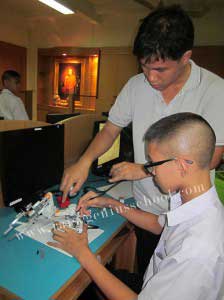
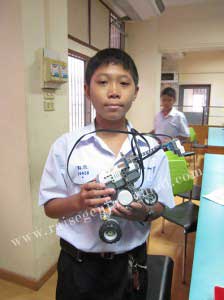
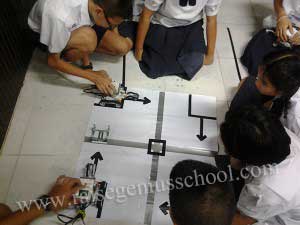
These images are retained from the original page as examples of published learning activities and programme information. Some contain Thai text or historical dates. They do not guarantee the same result for a new learner. Confirm current programmes with the team.
View original images






Original video archive
Choose a link to open the original video on YouTube. No external player, automatic playback or YouTube thumbnail is loaded here. The clips are retained from the published archive; their language, availability and content belong to the original upload.
Frequently asked questions
Can lessons be part of the normal timetable?
The source describes both timetable lessons and after-school or club formats. A school agrees the actual arrangement with the provider.
Is this curriculum only for secondary pupils?
The source includes primary and secondary schools. Activities and assessment need to match learners’ experience and the school’s goals.
Are the named schools current customers?
They are published archive examples. This page does not confirm a current contract or imply an endorsement.
Does the programme guarantee an engineering admission?
No. One learner’s reported experience is not a guaranteed outcome for another applicant.
Contact and related pages
Tell the team about the learner or organisation, relevant experience and the intended learning purpose. Confirm the current programme, equipment, availability, schedule and fees before booking.
Contact Raise Genius School service overview
- October Robotics Camp: 4 Useful Planning Checks
- Holiday STEM Camp: A Practical School Planning Guide
- Online LEGO Coding: Live Robotics Learning from Home
- Robot Invention: Creative Learning through Student Projects
- Service Robots: A COVID-19 Technology Archive
- School Camp Visit: Memories from Sap Noi Nuea
- Toy Safe: A Playful Locking-Mechanism Project
- Learning Habits: Small Goals and Supportive Practice
- Family Media Habits: Games, Balance and Conversation
Course-selection guide · Robotics portfolio projects · Competition preparation · Team advice and coaching · Course guide · General FAQ
Related services: School robotics camps · STEM activity stations
Related learning: Raise Maker Arduino · micro:bit robotics · IOTBot & AI · Portfolio preparation · Camp proposal · Accompanying teachers
Related reference: School services