Primary and Secondary Robotics Camps: Match the Challenge
RAISE GENIUS · PARENTS & SCHOOLS
Primary and Secondary Robotics Camps: Match the Challenge
Primary and secondary robotics camps can use similar equipment while pursuing different goals. The source emphasises a successful construction or control experience for younger pupils and a challenge involving testing and revision for lower-secondary pupils. Reusing one unchanged plan risks leaving one group waiting and another unable to finish.
Contact the teamOn this page
Three differences in primary and secondary robotics camps
Activity rhythm: the source describes a six-hour day but suggests shorter task segments and recreation for younger primary pupils. It gives forty to sixty minutes as an illustrative construction segment, not a universal attention-span measurement.
Task design: a primary group may work towards a clear mission such as steering around cones or moving an object. A lower-secondary group can compare several possible solutions and explain why a first attempt failed.
Progression: a younger pupil may be motivated by completing a creation and joining a challenge. An older pupil may also want to discuss related study, careers and the next level of technical work.
What primary and secondary robotics camps can ask learners to do
For Years 1–3, the original puts more weight on construction and control, with shorter instructions and frequent group support. It describes a historical three-day Years 1–4 event at Yuwapat in Nakhon Sawan.
For Years 4–6, the article gives Anuban Ratchaburi as a historical example of building, programming and a points-based challenge. At least one working robot per group is presented as a learning aim, not a take-home purchase promise.
For Mathayom 1–3, begin with a problem to analyse and let groups develop a method. The source cites examples at Anuchon Suksa, Lertlah Kanchanaphisek, Mathayom Wat Sing and Sam Khok, including robot principles, EV3 control or study/career discussions.
These are published examples. Current activities, software, equipment and challenge levels should be agreed for the actual pupils rather than copied from a historical event.
Three things to separate in primary and secondary robotics camps
Separate rounds: younger and older groups can attend different morning/afternoon sessions or other agreed slots. A shared opening can still give the day a common identity.
Separate tasks: the same equipment can serve different missions, with a level of decision-making appropriate to the group. Giving every pupil identical instructions is not the same as giving everyone a suitable challenge.
Separate support planning: younger groups may need more close adult help. Agree the school’s actual supervision requirements and accompanying teachers rather than infer a universal ratio from a broad age label.
Keep learner numbers by year group visible in the plan. A high total across several days does not mean all learners attend one room or station at the same time.
Planning primary and secondary robotics camps
Share exact school years, pupil counts in each group, previous robotics experience, available rooms/audio-visual equipment and the number of school teachers who can accompany groups.
The source uses different participation examples, including twenty to one thousand across an appropriate arrangement. Its younger-station paragraph gives twenty to forty per group but contains an unreadable rotation-time figure. This translation does not guess that duration; agree the actual round length with the team.
A full camp is described as approximately six hours per day, often two or three days, with seven stages from introduction and foundations to construction, challenge and review. If only a short period is available, discuss a station format rather than promise the same programme compressed into half a day.
The original refers to IPST’s discussion of planning STEM activities. Equipment and instructor preparation work best alongside school teachers who know the pupils. Confirm the exact programme, venue, staffing, equipment and fees before booking.
Original photographs and artwork
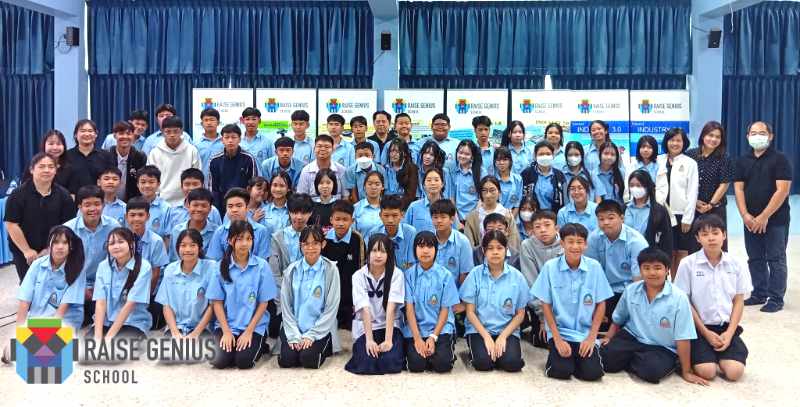
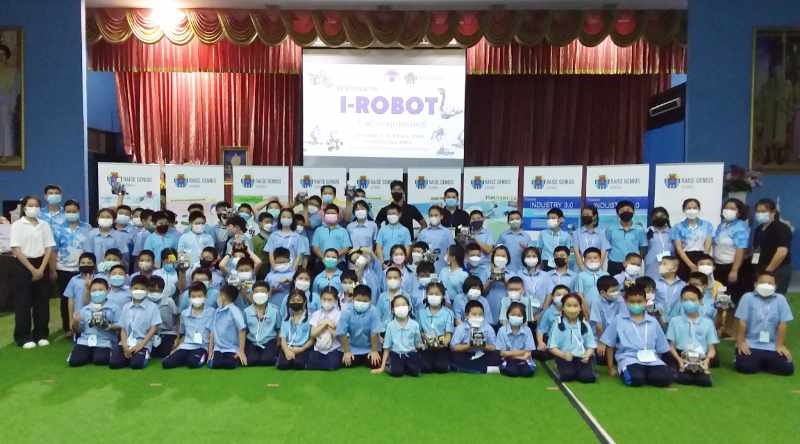
These images are retained from the original page as examples of published learning activities and programme information. Some contain Thai text or historical dates. They do not guarantee the same result for a new learner. Confirm current programmes with the team.
View original images

Frequently asked questions
Can primary and lower-secondary pupils attend on the same day?
Yes, the source proposes a shared event with separate rounds, tasks and support plans. Confirm year groups and pupil numbers so the activities can be adapted.
Do different ages require entirely different robots?
Not necessarily. Similar equipment can support different missions. The learner’s task and expected explanation should match readiness rather than only the kit type.
What if only half a day is available?
Discuss a suitable rotating-station format. The source describes a full camp as around six hours and does not establish that the same programme fits into a short session. Its malformed rotation-time figure needs confirmation.
Contact and related pages
Tell the team about the learner or organisation, relevant experience and the intended learning purpose. Confirm the current programme, equipment, availability, schedule and fees before booking.
Contact Raise Genius School service overview
- Study Paths for Young Inventors: Five Options
- School or Offsite Robotics Camps: Five Checks
- Individual or Group Coding Lessons for Children
- Academic or Vocational Robotics after Lower Secondary
- Choosing a Robotics Engineering Degree: Interests, Labs & Projects
- Preparing a School Robotics Camp Venue
- Robotics Camps for Small Schools: Start with the Group
- Planning Robotics Stations for School Events
- An Authentic TCAS Portfolio: Show Your Own Work
Course-selection guide · Robotics portfolio projects · Competition preparation · Team advice and coaching · Course guide · General FAQ
Related services: School robotics camps · STEM activity stations
Related learning: Raise Maker Arduino · micro:bit robotics · IOTBot & AI · Portfolio preparation · Camp proposal · Accompanying teachers
Related reference: IPST: planning STEM activities (Thai)