
RAISE GENIUS · ARTICLES & LEARNING
School Robotics Lab Design & Installation
School robotics lab design brings equipment, teaching resources and classroom use into one plan. The source offers design and installation for robotics classrooms, clubs and competition-practice rooms in primary, secondary and vocational schools across Thailand.
Contact the teamOn this page
Why school robotics lab design starts with teaching
The original page describes growing interest in robotics for pupils’ personal interests and for competition preparation. Preparing a classroom for many learners calls for planning and design around how the space will be used.
A collection of kits alone is not the same as a teaching programme. The source presents the team as advisers across robotics lessons, clubs, competition coaching, classroom setup and teacher training.
School robotics lab design should therefore be discussed alongside the school’s learners and teaching purpose. The original page says equipment can be arranged to suit the number of pupils in each session; it gives no universal room capacity or fixed package.
Resources named in the school robotics lab design outline
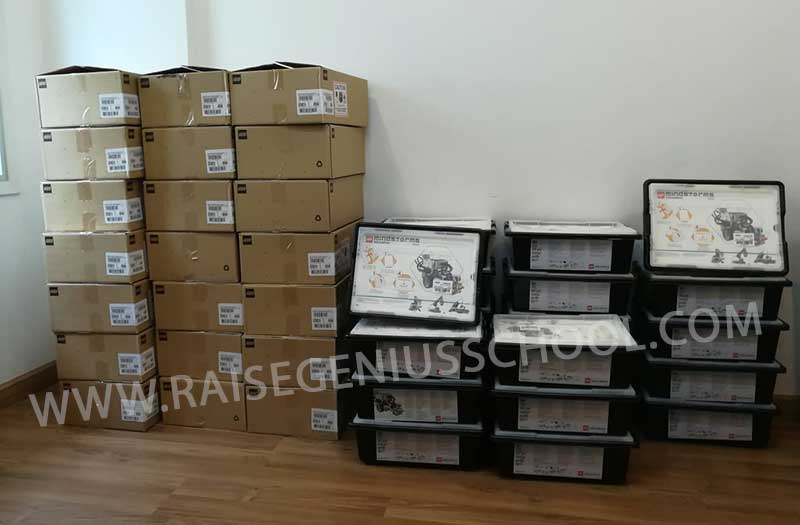
The source names LEGO Mindstorms EV3 kits with necessary extra parts, supporting equipment, practice fields, training equipment and competition-preparation fields.
It also lists 3D Learning on Cloud resources for robotics and knowledge charts. Those are the resources named in the published description, not a promise that every element is included in every quotation.
Confirm the currently supported kits, software, learning-resource access and proposed quantity of each item. The age of a source image or the kit model in an old photograph does not establish present stock or software support.
Five useful planning steps for the enquiry
1. Describe the learners: primary, secondary or vocational level, and how many pupils attend each round. The original service explicitly connects the setup to session size.
2. Explain whether the room will support lessons, a club, competition preparation or several uses. These are the learning settings in the source.
3. Review existing kits and the proposed resources. Discuss mechanisms, extra parts, fields, supporting equipment, charts and digital learning resources with the team.
4. Discuss teacher preparation and ongoing teaching use. The source offers advice and training alongside equipment supply.
5. Ask for a scoped proposal and confirm the current items, quantities, installation arrangements, access to resources, timetable and price. These are enquiry prompts derived from the service outline, not a fixed installation procedure or an unquoted service commitment.
Experience and school support
The profile describes more than eight years of robotics teaching, club work, competition coaching, classroom setup and teacher training at the time of that account. It says the team provides consultation across these areas rather than only selling kits.
That historical figure is not recalculated into a current years-of-operation claim here. Ask which teachers, resources and follow-up arrangements apply to the school’s proposed project.
Related English pages cover curriculum/classroom planning, school lesson formats, teacher training, camps and competition preparation. School robotics lab design is a separate enquiry about the physical and learning setup.
Institute profile and next steps
The source profile mentions UTO support through KMUTT’s University Business Incubator, innovation support from the National Innovation Agency and franchise-standard recognition from the Department of Business Development, Ministry of Commerce.
These are school-profile statements from the original page, not a newly verified grant or endorsement of a particular installation. The school should confirm any current certification or support claim before using it in procurement documents.
Contact Teacher Num through the English contact page with the school’s level, intended uses, pupils per session and equipment already available. Confirm the proposed scope and current commercial terms before approval.
Original photographs and artwork
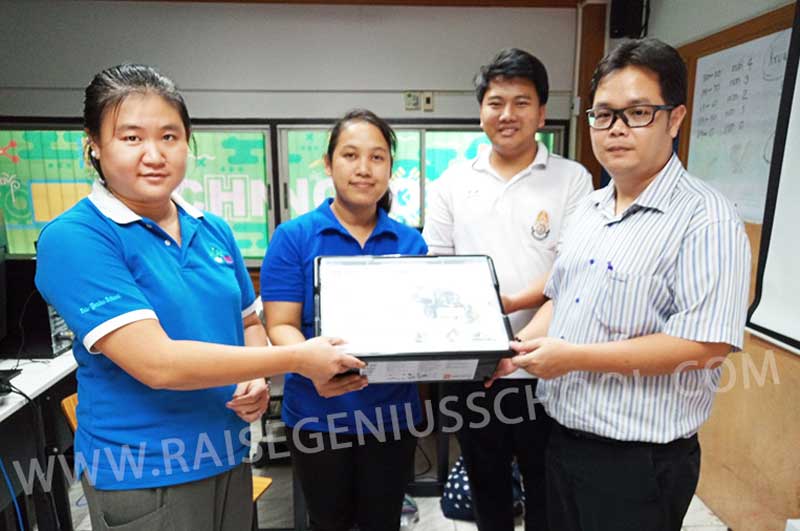
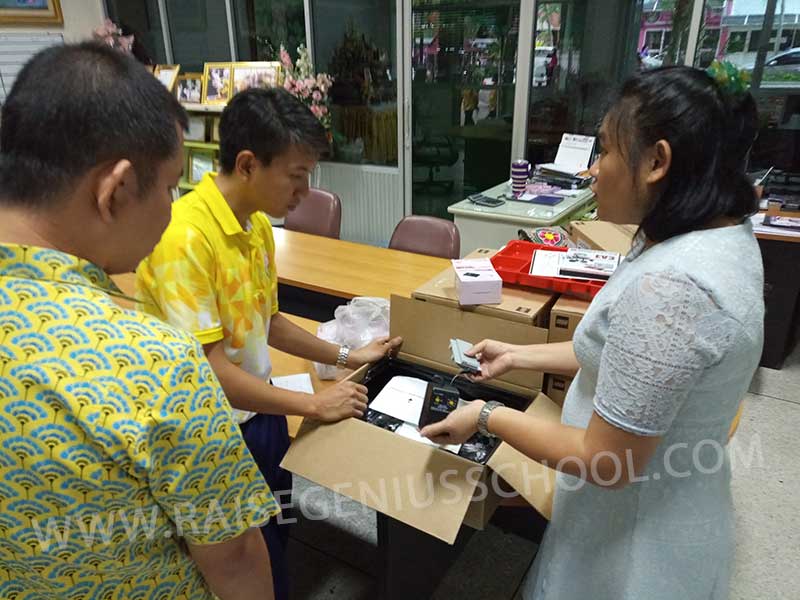
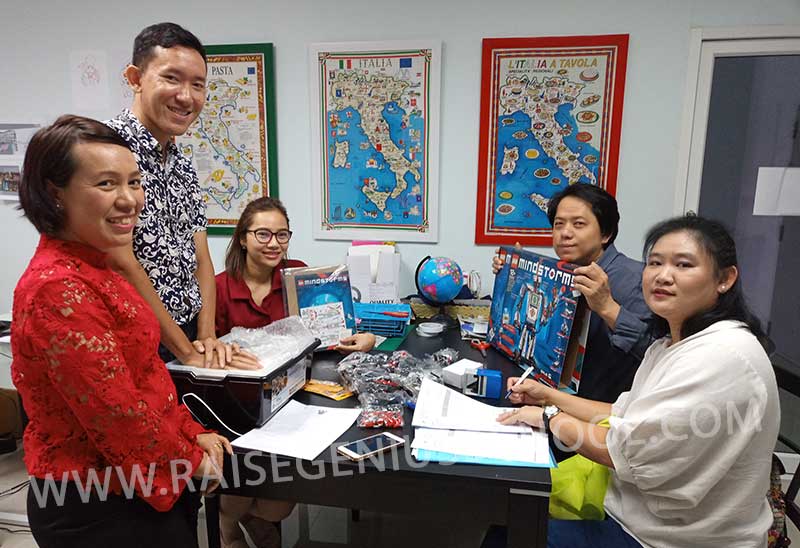
These images are retained from the original page as examples of published learning activities and programme information. Some contain Thai text or historical dates. They do not guarantee the same result for a new learner. Confirm current programmes with the team.
View original images

Frequently asked questions
Which schools are included in the service description?
The original page identifies primary, secondary and vocational schools across Thailand, with classrooms, clubs and competition-practice rooms.
What equipment does the source mention?
LEGO Mindstorms EV3 kits, extra parts, supporting equipment, practice/competition fields, 3D Learning on Cloud and knowledge charts. Confirm the current proposed package rather than assuming every item is included.
Is there a fixed room size or kit count?
No fixed size or count is published. The source says equipment can be arranged to suit the number of pupils in each session; discuss the school’s actual setting.
Is teacher training part of the discussion?
The source describes advisory and teacher-training experience alongside classroom setup. Confirm the training and follow-up included in the school’s particular proposal.
Does an old EV3 photograph confirm current stock or support?
No. It shows the original service context. Confirm current kit supply, software compatibility, resources and any existing equipment the school wants to use.
What should a school prepare for an enquiry?
Share the school stage, intended room uses, pupils per session and existing kits. Ask for the equipment, installation, training, resource access, timetable and price to be specified.
Contact and related pages
Tell the team about the learner or organisation, relevant experience and the intended learning purpose. Confirm the current programme, equipment, availability, schedule and fees before booking.
Contact Raise Genius School service overview
- Robot Coding with Graphic Programming & Python
- IoT Smart Farming Course for Beginners & Engineers
- Adult Robotics Training: Reskill & Upskill
- Should Children Still Learn Coding in the AI Era?
- School Robotics Curriculum for Every Learner
- STEM Articles & Learning Guides
Course-selection guide · Robotics portfolio projects · Competition preparation · Team advice and coaching · Course guide · General FAQ
Related services: School robotics camps · STEM activity stations
Organisations named in the original profile: NIA · Department of Business Development. These links do not verify a current endorsement.