
RAISE GENIUS · EVENTS & OFFERS
Science Day Activities & School Open Houses
Science day activities can turn a school event into an opportunity to explore robotics through hands-on play. Raise Genius provides STEM booths, robot-control games and technology demonstrations for school science days, academic events, open houses and guidance programmes.
Contact the teamOn this page
Five ways to explore science day activities
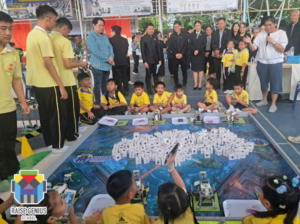
Robot-control games let pupils try a practical challenge and relate a controller’s input to a robot’s movement. The source describes racing-car control, mission games and opportunities to learn by trying.
Science and robotics questions give participants a way to explain what they notice and test their understanding. Facilitators can connect the question with the activity rather than treat a booth as a display to pass by.
Technology demonstrations introduce examples of robots and inventions. The choice of demonstrations should fit the purpose of the event and the age of the visitors.
Activity stations organise practical learning into different bases. The published format combines learning, games, questions, hands-on tasks and demonstrations, with stamps or points for agreed rewards.
Education and career conversations give pupils, teachers and parents a chance to ask about robotics and STEM pathways. These five ideas describe the source’s activity formats, not a fixed package of five booths for every event.
Learning goals of science day activities
The original objectives are to introduce science knowledge through booth activities, encourage interest in robotics and STEM, and create a lively focus within the school’s wider event. Science day activities should be planned around the school’s educational goals.
The source emphasises variety and explanation throughout the programme. A pupil may try a robot, ask why it behaves in a particular way and discuss the connection with an everyday technology example. This gives the team an opportunity to adapt an explanation to the visitor’s question.
Facilitators answer questions from children, teachers and parents. The activities can support an open house or school presentation, but do not guarantee a particular learning score, enrolment result or later career outcome. A clear brief helps the school select activities suited to its audience.
Preparing space for science day activities
The published outline suggests a multipurpose area with a level surface and protection from rain, or an indoor meeting room. An indicative area of twenty to thirty square metres is mentioned, depending on the selected activity.
Treat that area as a starting point for discussion, not a universal capacity or safety specification. Send the team the layout, access, expected ages, participant numbers and proposed activities so that the actual space and rotation arrangements can be assessed.
For science day activities at a larger event, discuss how pupils enter and leave each booth, where supporting teachers will stand and how the programme fits the wider timetable. Confirm the agreed facilities, equipment, staffing and responsibilities before the event.
Science day activities in the school project archive
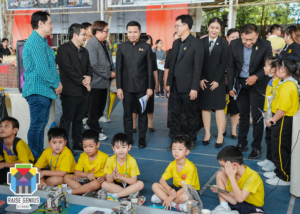
The published 2026 Sukhonthirawit School account thanks the school for a tenth year of robotics-team collaboration and describes a science-day visit by education officials and invited guests. This is a historical statement from the source, not a newly verified endorsement or a promise of future official visits.
Anuban Ratchaburi examples show robot-control racing games, science questions and prizes. Other Sukhonthirawit examples in Nakhon Pathom include vehicle-control games, robotics questions and technology demonstrations.
The open-house archive at Nawaminthrachinuthit Satriwitthaya Phutthamonthon records VR, AR, Internet of Things and robot-arm demonstrations, with parents asking about the projects. Another open-house example at Srinakharinwirot University Demonstration School, Ongkharak, shows children trying robot controls.
Other Sukhonthirawit archive captions describe an automatic clothes-drying/collecting project, robotics and careers, VR to inspire construction ideas, AR activity instructions and 3D eLearning or tablet-based robot construction. These are examples of earlier exhibits; confirm which demonstrations and equipment can be provided for a new event.
Arrange science day activities in three planning steps
First, describe the school’s event: science day, academic day, open house, STEM programme or education/career guidance. Share the year groups, participant numbers and preferred date.
Second, discuss the activities and venue. Select a suitable mix of games, demonstrations and stations, then consider how visitors will rotate and how much practical time each group can receive.
Third, confirm the scope, budget, duration, equipment and what each party will prepare. The source does not specify a universal price or a fixed list of included prizes. Any points, stamps or rewards must be part of the agreed programme.
For a longer pathway after science day activities, explore robotics camps, rotating STEM stations, a school robotics curriculum or teacher training. These are related services to discuss, not automatic inclusions in a single booth booking.
Original photographs and artwork
These images are retained from the original page as examples of previous work and historical offers. Some contain Thai text or historical dates and prices. They are not active offers or current registration instructions. Confirm current equipment, availability and conditions with the team.
View original images







Frequently asked questions
Which school events suit science day activities?
The source covers science days, academic events, open houses, STEM programmes and education or career guidance. Select activities around the learners’ ages and the organiser’s goals.
How much space should the school prepare?
The initial outline mentions about 20-30 square metres, depending on the activity. A level, rain-protected multipurpose area or meeting room can be discussed. Send the layout to the team for confirmation before booking.
What do pupils do in science day activities?
Examples include robot-control games, science questions, technology demonstrations and hands-on stations. Points, stamps or rewards depend on the format agreed with the school.
Are VR, AR and every robot shown in the gallery included?
No fixed equipment package is established by the archive. The photographs show previous work. Confirm the demonstrations, kits, staffing and facilities available for the requested date.
How can we request a science day activities quotation?
Share the date, venue, year groups, participant numbers and event goals through the English contact page. The team can discuss a scope and budget suited to the school before confirming the programme.
Contact and related pages
For a course enquiry, tell the team the learner’s age and interests. For an event, share the date, location, participant ages, numbers and goals. Confirm the current price, inclusions, availability and conditions before booking.
Contact Raise Genius School service overview
- Course Promotions & Historical Offers
- Robotics Events for Children & Family Workshops
- Robotics Activities, Workshops & Event Archive
Institutional reference: IPST science and technology education resources (Thai). This provides educational context, not endorsement of a current event or course promotion.
School robotics camps · STEM activity stations · Individual course guide · General FAQ