LEGO Bricks: Origins and a Robotics Timeline
RAISE GENIUS · PARENTS & SCHOOLS
LEGO Bricks: Origins and a Robotics Timeline
LEGO bricks have a history beyond the models on a classroom table. This translation follows the original 2014 introduction while correcting several dates and separating old services from present offers.
Contact the teamOn this page
From wooden toys to LEGO bricks
The source begins in Billund, Denmark, where Ole Kirk Christiansen started the toy business in 1932. It explains LEGO as a name formed from the Danish words “leg godt”, commonly rendered as “play well”. The original article’s reference to more than eighty years of development belongs to its 2014 publication period.
The source associates the shift to plastic with 1958. More precisely, plastic products appeared earlier, while 1958 marks the familiar brick’s important coupling-system development and patent. The interlocking system lets builders connect and rearrange pieces without glue, providing the basis for many different models.
Different building systems and figures
The archive discusses DUPLO, minifigures and Technic. DUPLO was launched internationally in 1969, rather than originating in 1978 as the source’s sequence could suggest. Technic began in 1977, and the familiar minifigure with movable arms and legs followed in 1978. These are distinct milestones.
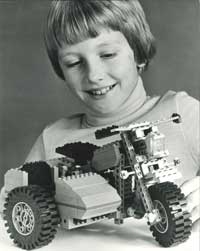
The article connects Technic’s structures and mechanisms with later robotics possibilities. It also describes computer-controlled models, sensors and educational software as steps towards programmable construction. Those developments took place over time; they should not be presented as one product launch with every later capability already included.
LEGO bricks meet computing and robots
The source mentions the LEGO website, CD-ROM-era software, Creator, Chess, Loco, RoboLab and the Robotics Invention System. These belong to the digital-building and programming history described by the archive. An old service or software name does not establish current availability or compatibility.
LEGO MINDSTORMS launched in 1998, followed by NXT in 2006 and EV3 in 2013. The original celebrates EV3’s programmable controller as an important step forward. A comparison with a small computer is introductory language, not a claim that every controller can run arbitrary modern desktop software.
Themes, digital design and the archive’s conclusion
The original also mentions Harry Potter, LEGO Factory’s design-and-order idea and LEGO Friends in 2012. Its dates for licensing and digital ordering should not be treated as a verified launch chronology here. These examples illustrate the range of themes and ways of designing, rather than offering an old ordering service as a current option.
The source originally describes Friends as a product for girls. This translation keeps the historical example without restricting imaginative building by gender or promising one age range fits every set. The author’s closing invitation is to enjoy building and keep developing ideas; the opinion that LEGO is the world’s best educational toy is not presented as an objective ranking.
Original photographs and artwork
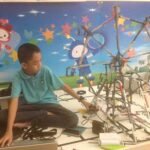
These images are retained from the original page as examples of published learning activities and programme information. Some contain Thai text or historical dates. They do not guarantee the same result for a new learner. Confirm current programmes with the team.
View original images


Original video archive
Choose a link to open the original video on YouTube. No external player, automatic playback or YouTube thumbnail is loaded here. The clips are retained from the published archive; their language, availability and content belong to the original upload.
Frequently asked questions
Did plastic LEGO products first appear in 1958?
Plastic products appeared earlier. The 1958 milestone concerns the modern brick’s coupling system and patent.
Did DUPLO begin in 1978?
No. Its international launch was in 1969. The familiar minifigure’s 1978 milestone is a different event.
When did MINDSTORMS, NXT and EV3 arrive?
The timeline used here is MINDSTORMS in 1998, NXT in 2006 and EV3 in 2013.
Are the old software and ordering services still offered?
This archive does not confirm that. Check present availability and compatibility separately.
Contact and related pages
Tell the team about the learner or organisation, relevant experience and the intended learning purpose. Confirm the current programme, equipment, availability, schedule and fees before booking.
Contact Raise Genius School service overview
Course-selection guide · Robotics portfolio projects · Competition preparation · Team advice and coaching · Course guide · General FAQ
Related services: School robotics camps · STEM activity stations
Related learning: Raise Maker Arduino · micro:bit robotics · IOTBot & AI · Portfolio preparation · Camp proposal · Accompanying teachers
Related reference: LEGO Group history · Official DUPLO history · MINDSTORMS chronology