
Academic or Vocational Robotics after Lower Secondary
RAISE GENIUS · PARENTS & SCHOOLS
Academic or Vocational Robotics after Lower Secondary
Choosing academic or vocational robotics pathways after Mathayom 3 is a question about learning style, goals and future eligibility. The source compares the upper-secondary science/mathematics route with a vocational certificate in relevant technical fields. Both can develop useful skills, but neither automatically qualifies a learner for every university programme.
Contact the teamOn this page
Five checks for academic or vocational robotics pathways
Intended destination: discuss whether the learner is exploring a degree-based engineering route, technical work, enterprise or several possibilities. A practical experience can help make that discussion concrete.
Learning style: compare the appeal of theoretical mathematics and physics with earlier workshop, construction and practical troubleshooting work. Both routes need understanding as well as doing.
University requirements: read the exact qualification, subject, grade and application-route conditions for the intended programme and year. Do not infer that all faculties accept the same general or vocational background.
Placement arrangements: if considering a vocational college, ask which actual workplace partnerships and supervised learning opportunities are available to this programme and cohort.
Existing project evidence: a learner who can show and explain Arduino, robotics or IoT work has material for discussing interests. Projects support an application only where the institution’s eligibility and assessment requirements are also met.
How the two routes are described
The original compares three years of Mathayom 4–6 science/mathematics with a three-year vocational certificate. It describes the former as a stronger theoretical preparation and the latter as earlier practical work in industrial, electronics or mechatronics fields.
A dual vocational arrangement can involve learning in a workplace. Ask what the actual placement includes, who supervises it and how it fits the curriculum; do not assume every vocational enrolment includes the same experience.
The source’s older 2026 snapshot gives about 115,155 dual learners and a 22.6% share. The official OVEC DVE dashboard checked on 21 October 2026 instead displays 119,351 out of 518,702, or 23.01%. These are changing dashboard totals, not a quality rating for an individual college.
Academic or vocational robotics by the learner’s present stage
Late primary to early secondary: there is time to try building and programming an actual robot. Enjoying the appearance of robotics and enjoying repeated technical troubleshooting may lead to different choices.
Mathayom 3: discuss the five checks with the learner rather than decide solely from an adult’s view of prestige. Compare real school programmes, practical opportunities and possible later requirements.
After choosing general upper secondary: continue a manageable project alongside school subjects if practical engineering remains an interest. Keep evidence of what the learner made and understood.
After choosing a vocational certificate: check the actual dual-placement arrangements and map any additional mathematics or physics preparation required by a possible degree route. Confirm requirements directly with both the college and the target university.
What supplementary project teaching can contribute
The article describes Raise Maker with Arduino, C++ and IoT, small groups of up to six per round and Saturday or Sunday examples. Other school pages describe different group ratios and days, so confirm the current exact course.
The school’s stated role is to let learners try project work, recognise an interest and record their own contributions. Selecting a university or judging a particular college’s placement system remains a family decision supported by those institutions’ information.
The original recounts experience with learners from general and vocational backgrounds and mentions fifteen years of teaching and KMUTT incubation. Those are attributed school descriptions, not a guarantee of admission or work.
Ask what the learner would like to build first and compare the actual study plans. A route should connect a practical interest, academic foundations and current eligibility rather than be chosen from its name alone.
Original photographs and artwork
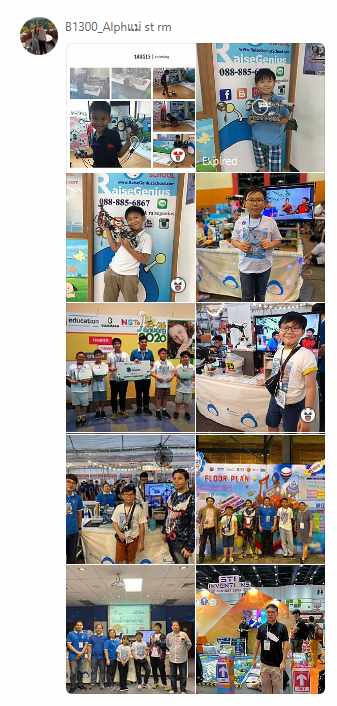
These images are retained from the original page as examples of published learning activities and programme information. Some contain Thai text or historical dates. They do not guarantee the same result for a new learner. Confirm current programmes with the team.
View original images
Frequently asked questions
Which route after Mathayom 3 is better for robotics?
The source suggests comparing theoretical study with earlier technical practice, using the learner’s goals and preferred way of learning. Check actual school and university conditions before choosing.
Can a vocational learner apply for a robotics degree?
Some programmes may accept relevant vocational qualifications, but eligibility varies by institution, project and year. Read the current announcement and check subject requirements directly.
What should be checked at a vocational college?
Ask about the programme’s actual workplace partnerships, supervised placements, learning content and any mathematics or physics preparation needed for later study. A national dashboard share does not assess that college.
What if the learner only likes watching robots?
Try a manageable construction and programming task and observe how the learner responds to testing and fixing it. Practical experience can clarify an interest before a route is chosen.
Contact and related pages
Tell the team about the learner or organisation, relevant experience and the intended learning purpose. Confirm the current programme, equipment, availability, schedule and fees before booking.
Contact Raise Genius School service overview
- Study Paths for Young Inventors: Five Options
- School or Offsite Robotics Camps: Five Checks
- Individual or Group Coding Lessons for Children
- Choosing a Robotics Engineering Degree: Interests, Labs & Projects
- Preparing a School Robotics Camp Venue
- Robotics Camps for Small Schools: Start with the Group
- Primary and Secondary Robotics Camps: Match the Challenge
- Planning Robotics Stations for School Events
- An Authentic TCAS Portfolio: Show Your Own Work
Course-selection guide · Robotics portfolio projects · Competition preparation · Team advice and coaching · Course guide · General FAQ
Related services: School robotics camps · STEM activity stations
Related learning: Raise Maker Arduino · micro:bit robotics · IOTBot & AI · Portfolio preparation · Camp proposal · Accompanying teachers
Related reference: OVEC dual vocational education data