A Guide to School Robotics and STEM Camps
RAISE GENIUS · PARENTS & SCHOOLS
A Guide to School Robotics and STEM Camps
School robotics and STEM camps combine a concentrated practical activity with a programme agreed around the pupils and the school’s goals. The original guide describes one-day and multi-day learning, with construction, control, challenges and review. It is a service-planning guide rather than a fixed package for every school.
Contact the teamOn this page
School robotics and STEM camps: goals and themes described in the source
STEM robotics workshops focus on construction and programming. Industry 4.0 activities connect robotics with automation and modern production ideas.
STEAM activities emphasise analytical thinking, design and presenting work. Innovation activities include finding a problem, researching, proposing a solution, building and pitching an idea.
The source also mentions humanoid-robot demonstrations and control challenges as a historical theme. Confirm which equipment and themes are actually available for the proposed event.
The educational aims include applying STEM knowledge to a practical problem, developing curiosity, working in groups and reflecting on the result. These are aims to plan and review, not guaranteed outcomes for every attendee.
Five format options to discuss
One-day camp: the original example is approximately six hours and can introduce an activity or a school event.
Three-day camp: the source gives Monday–Wednesday or Wednesday–Friday as illustrative arrangements for more depth.
Longer multi-day arrangements: larger participation may be distributed across days or rotating activities rather than place everyone at one station simultaneously.
In-school event: use an agreed meeting, computer or activity room, with the visiting team bringing the agreed equipment.
Offsite event: confirm the venue, provider scope, travel, supervision and the school’s own applicable approval process. The source’s ability to discuss a location does not establish every offsite service as currently available.
Learners, equipment and the activity sequence
The source’s general span is primary Year 1 through Mathayom 6, with some historical kindergarten examples. Activities and support need to be adapted to actual years and experience.
Its thirty-to-one-thousand figure is qualified in the body as numbers distributed by year group or over several days. Confirm the real round-by-round capacity instead of treating the FAQ’s broad total as simultaneous attendance.
The example sequence has seven stages: introduce instructors and groups; explore robotics basics; recreation; robotics/automation games; build; take part in a challenge; review learning and present agreed awards.
The source gives at least one constructed robot per small group as an activity aim. It does not establish that every pupil purchases or takes home a kit.
Price, preparation and related services
Cost depends on days/hours, learner numbers, equipment, location and the agreed format. The source mentions LEGO EV3 and Will Robot as examples. Obtain a quotation for the exact event instead of inferring current stock or a universal price.
The visiting team is described as providing robotics and recreational materials. The school supplies a suitable venue and agrees accompanying teachers, room setup, audio/visual equipment and any food or other responsibilities.
The original lists historical events at schools including Berkeley International, ACEP, Anuban Ratchaburi, Lertlah Kanchanaphisek, Yuwapat Nakhon Sawan and others. Verify names and event evidence before using them as case studies or implying a current endorsement.
Related school services include classroom/curriculum setup, teacher training and competition coaching. Share objectives, years, numbers, room information, dates and budget before requesting a proposal.
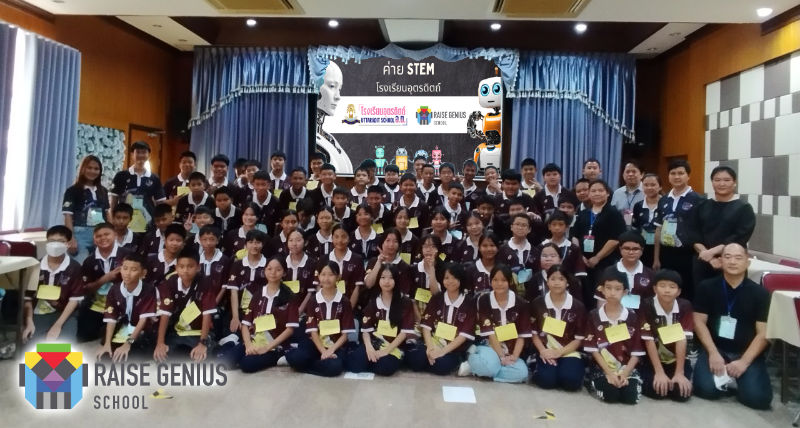
Original photographs and artwork
These images are retained from the original page as examples of published learning activities and programme information. Some contain Thai text or historical dates. They do not guarantee the same result for a new learner. Confirm current programmes with the team.
View original images

Frequently asked questions
Which pupils can join?
The source generally describes primary to upper secondary, with activities adjusted by year and experience. Confirm the proposed age band and support.
What does a camp cost?
No single current fee is established. Request a quotation based on learner numbers, days, equipment, location and the actual activity plan.
Can one thousand learners attend?
The source body describes distributing large numbers by year group and across days or station arrangements. Agree actual capacity and practical turns rather than assume simultaneous participation.
How are robotics and STEM camps different?
Robotics focuses on building and controlling robots; a STEM programme can make the connected science, engineering, mathematics and computing aims more explicit. The formats can overlap.
Must the school buy all the robots?
The original describes the visiting team bringing agreed equipment. Confirm the written scope and the school’s venue, staffing and other responsibilities.
Can the event be offsite?
Discuss the actual venue and provider scope and confirm the school’s applicable travel, supervision and approval arrangements before committing.
Contact and related pages
Tell the team about the learner or organisation, relevant experience and the intended learning purpose. Confirm the current programme, equipment, availability, schedule and fees before booking.
Contact Raise Genius School service overview
- Benefits of Robotics Learning for Children
- Minecraft Education: First Coding Steps for Primary Learners
- When to Start a Robotics and AI Portfolio
- AI Learning for Children: Start with Coding Foundations
- Equipment, Curriculum and Training for a School Robotics Club
- Starting an AI or IoT Project for a Portfolio
- Choosing a Coding Course for Children: A Family Guide
- Roblox Game Making or Minecraft Education: Where to Begin?
- Robotics Engineering Careers and a Changing AI Workplace
Course-selection guide · Robotics portfolio projects · Competition preparation · Team advice and coaching · Course guide · General FAQ
Related services: School robotics camps · STEM activity stations
Related learning: Raise Maker Arduino · micro:bit robotics · IOTBot & AI · Portfolio preparation · Camp proposal · Accompanying teachers
Related reference: IPST STEM resources (Thai)