Teacher Support for School STEM Activity Stations
RAISE GENIUS · PARENTS & SCHOOLS
Teacher Support for School STEM Activity Stations
Teacher support for STEM stations centres on four practical duties in the source: bringing a group to the correct round, organising movement between stations, helping pupils communicate with instructors and recording the activity as agreed. The visiting robotics team leads technical teaching; accompanying school teachers know their pupils and help them participate.
Contact the teamOn this page
Four duties in teacher support for STEM stations
Bring the group to the right place at the agreed time. A clear group list and timetable let the accompanying teacher identify who should be present before the activity starts.
Organise movement between stations. When several groups move together, count pupils before leaving a station and follow the agreed route. Waiting until arrival can delay noticing that someone has left the group.
Help participation and communication. A quiet pupil may need an invitation to try a controller or explain a question. A confident pupil may need a reminder to share parts and let a teammate test an idea.
Record the activity where agreed. Photographs and observations can help the school describe what happened, subject to its arrangements. The accompanying teacher does not need to become the event’s robotics instructor.
Who provides teacher support for STEM stations?
The article says the role is not restricted to computing or science teachers. A class teacher often knows who needs help with transitions, who may wander and who can remain unnoticed at the back of a group.
Physical-education and guidance teachers may also bring useful experience with queues, group movement and pupils’ needs. Familiarity with the group and the school’s arrangements is more relevant here than knowing a particular sensor.
The source connects this role to active learning: facilitating, encouraging, advising and helping learners build understanding through participation. The technical instructor and the accompanying teacher have complementary responsibilities.
Estimate teacher support for STEM stations from the schedule
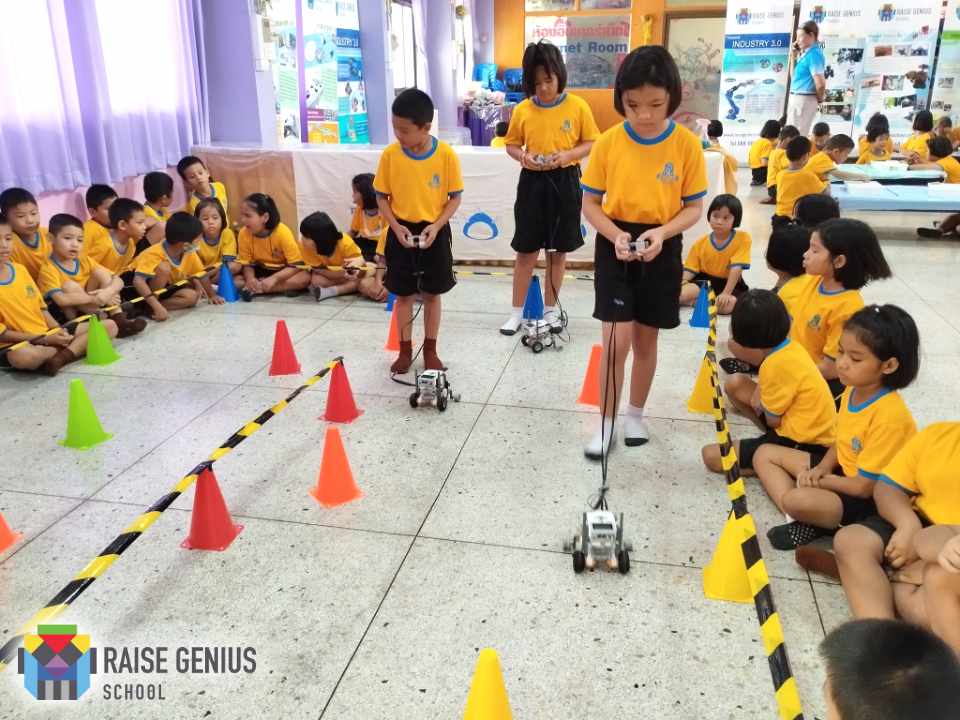
The source’s station examples use groups of approximately thirty to seventy, rotating every ninety to one hundred and twenty minutes. It describes around one hundred and twenty to three hundred participants in an appropriately planned day, depending on the arrangement.
The article proposes at least one accompanying teacher per group, moving with that group rather than remaining permanently at a station. For groups above fifty, it suggests two so that the front and rear of a moving line can be observed.
It also suggests one or two reserve teachers for needs such as a pupil visiting the nurse or toilet, plus a coordinating teacher who is not tied to one group and can speak with the lead instructor about timing.
These are the source’s planning suggestions, not a universal safeguarding ratio. Confirm the school’s own requirements, learner needs, venue, staffing and the provider’s scope before agreeing the event. Larger events may be spread over several days.
Teacher support for STEM stations during each round
Inside the activity, watch whether each pupil has an opportunity to build, control or explain something. A simple invitation to let a classmate try can change the experience of a quiet learner without interrupting technical teaching.
At the transition, the visiting instructors may be resetting equipment and mission areas. The group teacher remains important because this is when pupils can leave the queue or stop elsewhere without the technical team seeing.
Count before leaving, keep the group together and use the agreed route. Communicate a missing pupil, timing issue or support need through the school’s agreed process instead of assuming another adult has noticed.
Agree the division of responsibilities before the event
The source describes the visiting team bringing robots, mission areas and teaching materials, leading technical content and designing suitable station rounds. Confirm those deliverables in the actual proposal.
The school provides the venue and accompanying teachers and shares pupil numbers, year groups and available staff in advance. A brief before the event can clarify the timetable and responsibilities without requiring every accompanying teacher to complete a robotics teaching course.
If the school has too few available teachers, discuss group sizes, station numbers, time per station or a multi-day arrangement. Older pupils may assist where the school agrees, but they do not automatically replace required adult supervision.
For a full-day camp, the same principles apply with a different rhythm: groups spend longer together building and testing a robot, with more attention to teamwork and tiredness during later challenges. Confirm the format rather than copy a station timetable unchanged.
Original photographs and artwork
These images are retained from the original page as examples of published learning activities and programme information. Some contain Thai text or historical dates. They do not guarantee the same result for a new learner. Confirm current programmes with the team.
View original images

Frequently asked questions
What if the school has too few available teachers?
Tell the team the actual staffing early. Discuss adjusting station count, group size, duration or days while meeting the school’s supervision requirements. Older pupil helpers are additional support where agreed.
Must accompanying teachers complete technical training first?
The source says a short event briefing is sufficient for this accompanying role. Teaching robotics as an ongoing school subject is a separate teacher-training service.
How does the role differ at a full-day camp?
Group movement may be less frequent, while teamwork, participation and tiredness need more attention. The visiting team still leads the agreed technical activities.
Contact and related pages
Tell the team about the learner or organisation, relevant experience and the intended learning purpose. Confirm the current programme, equipment, availability, schedule and fees before booking.
Contact Raise Genius School service overview
- Entrepreneurial Maker Course: Automation & Presentation
- Online EV3 Programming Lessons: Original Video Archive
- LEGO Robotics for Kids: Build, Program & Present
- Scratch or Python for Kids: Choosing a Starting Point
- From Playing Games to Coding with Minecraft & Roblox
- Starting Coding and AI: An Age & Readiness Guide
- Learning Robotics When Maths Is Difficult
- Preparing a Robotics Engineering Portfolio
- Writing a School Robotics Camp Proposal
Course-selection guide · Robotics portfolio projects · Competition preparation · Team advice and coaching · Course guide · General FAQ
Related services: School robotics camps · STEM activity stations
Related reference: IPST: active learning example (Thai)