
Keep the Activities, Clarify the Brain-Side Claim
RAISE GENIUS · PARENTS & SCHOOLS
Keep the Activities, Clarify the Brain-Side Claim
Creative and logical construction are connected in this archive’s holiday article. Its examples remain useful without labelling children by a dominant brain hemisphere.
Contact the teamOn this page
Creative and logical construction after the holidays
The original begins with Songkran memories and preparing for a new school term. Drawing, piano, cooking and robot construction are suggested as opportunities to explore skills.
The source describes its classes as six to eight learners and programming for approximately ages eleven to thirteen and older, with teachers coding for younger children. Those are historical programme arrangements, not a scientific age threshold or a current class-size guarantee.
Imagine a model and turn pieces in space
Washing machines, diggers, aircraft, sharks and three-headed dragons are examples of the models learners might imagine. Rotating or flipping a piece can reveal a connection that was difficult from another angle.
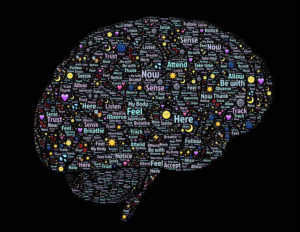
These are spatial and design activities. The archive calls them “right-brain” development, but the English edition does not present that simple mapping as a measured explanation of how a particular child learns.
Choose a structure and express an instruction
The source then describes choosing parts for arms, legs or wings, keeping a model stable and programming a movement or sound. These connect an intended function with practical constraints.
It calls that work “left-brain” development. Research does not support classifying people as globally left-brained or right-brained in the popular sense. Creative and logical construction can involve connected processes, with no need for a hemisphere score.
Sharing and support matter too
The archive also values explaining a finished creation, attention to the activity and interaction with peers. These are opportunities rather than guaranteed outcomes for every learner.
Ask about today’s teaching approach and suitable tasks. A learner can use concrete materials, demonstration and supported instructions without being assigned a fixed brain type.
Original photographs and artwork
These images are retained from the original page as examples of published learning activities and programme information. Some contain Thai text or historical dates. They do not guarantee the same result for a new learner. Confirm current programmes with the team.
View original images
Frequently asked questions
Does the article prove that one activity trains one brain side?
No. The simplified hemisphere explanation is not presented as established evidence.
Is eleven a universal minimum age for coding?
No. The source describes an old programme arrangement.
Are six-to-eight-person classes guaranteed now?
No. Confirm the current class and support arrangements.
Contact and related pages
Tell the team about the learner or organisation, relevant experience and the intended learning purpose. Confirm the current programme, equipment, availability, schedule and fees before booking.
Contact Raise Genius School service overview
- Teacher Num on Work, Technology and Changing Possibilities
- Observe, Test and Adapt an Idea with Support
- Research, Social Robots, Electronics and Useful Machines
- Cleaning, Cooking and Folding as Design Questions
- Bitcoin, AlphaGo and a Child’s First Design Ideas
- Technology Interest, School Workload and Playful Learning
- Collaboration across Thai Universities and Institutes
- A Small Robot, Coloured Paths and Planning
- AlphaGo, OpenAI’s Dota Bot and What a Result Means
Course-selection guide · Robotics portfolio projects · Competition preparation · Team advice and coaching · Course guide · General FAQ
Related services: School robotics camps · STEM activity stations
Related learning: Raise Maker Arduino · micro:bit robotics · IOTBot & AI · Portfolio preparation · Camp proposal · Accompanying teachers
Related reference: Nielsen et al.: testing the left-brain/right-brain hypothesis · NAEYC: developmentally appropriate practice
