
Connect Creative Ideas with Analytical Thinking
RAISE GENIUS · PARENTS & SCHOOLS
Connect Creative Ideas with Analytical Thinking
Creative and analytical thinking are the useful learning themes behind this article’s question about being strong in only one area. It encourages learners to notice opportunities as well as solve a supplied problem, then connects these abilities with designing and programming a robot.
Contact the teamOn this page
Creative and analytical thinking: question and solution
The source distinguishes working out how to solve a problem from deciding which problem is worth pursuing. A project can need both: an imaginative direction and careful reasoning about how to make it work.
Its original explanation assigns these roles to left-brained and right-brained people. That is an oversimplified personality metaphor, not a reliable way to classify a child’s abilities.
A research note on the brain metaphor
A 2013 study by Nielsen and colleagues examined resting-state connectivity in 1,011 people. It found regional patterns of lateralisation but did not support classifying individuals as having an overall left-brained or right-brained network style.
This English edition therefore discusses creative and analytical thinking without claiming that a course trains a preferred brain half or makes a child globally whole-brained. The practical learning idea can stand without that claim.
Examples are illustrations, not neurological evidence
The archive refers to Einstein, Steve Jobs, Larry Page and Sergey Brin as examples of connecting technical knowledge with an ambitious question. These are the author’s historical illustrations, not measurements of those individuals’ brain function.
The article’s useful question is what a learner can practise: understanding a mechanism, imagining a different result and choosing an approach. It does not establish a guaranteed link between a particular toy and later success.
Try the connection in a construction project
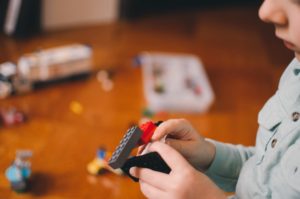
Raise Genius describes LEGO robot activities in which pupils think about structure and programming while developing an approach to a mission. The child has room to propose and test an idea instead of only copying an adult’s solution.
A design may work less effectively than an adult’s first suggestion and still provide something useful to investigate. Ask the learner to explain the decision and what they would change.
Confirm the current course, equipment, age expectations and teaching support with the team. Creative and analytical thinking are learning goals, not a brain diagnosis or a promised outcome.
Original photographs and artwork
These images are retained from the original page as examples of published learning activities and programme information. Some contain Thai text or historical dates. They do not guarantee the same result for a new learner. Confirm current programmes with the team.
View original images
Frequently asked questions
Why connect creative and analytical thinking?
An idea gives a project a direction, while reasoning, construction and testing help a learner investigate whether it works.
Should children be labelled left-brained or right-brained?
The cited research does not support that overall classification. This edition treats the archive’s split as a metaphor, not a personality test.
Does the course guarantee whole-brain development?
No. The activity can offer opportunities to design, reason and test. It is not a neurological intervention or a guarantee of an individual result.
Contact and related pages
Tell the team about the learner or organisation, relevant experience and the intended learning purpose. Confirm the current programme, equipment, availability, schedule and fees before booking.
Contact Raise Genius School service overview
- Imagination or Knowledge? Give Children Room to Develop Both
- Balancing Academic Study and Activities Children Enjoy
- Practising Patience through Making and Play
- Let Children Try, Make Mistakes and Keep Creating
- Make, Explain and Share: Confidence through Construction
- When a Child Keeps Delaying: Discuss the Task First
- What Could a Child Learn during the School Holidays?
- Family Support and School Learning Can Work Together
- What Is STEM? Connect Four Areas through Practical Work
Course-selection guide · Robotics portfolio projects · Competition preparation · Team advice and coaching · Course guide · General FAQ
Related services: School robotics camps · STEM activity stations
Related learning: Raise Maker Arduino · micro:bit robotics · IOTBot & AI · Portfolio preparation · Camp proposal · Accompanying teachers
Related reference: Nielsen et al. 2013: brain lateralisation study
