
Teacher Bung on Connecting Learning at School and Home
RAISE GENIUS · PARENTS & SCHOOLS
Teacher Bung on Connecting Learning at School and Home
Child centred play and learning is Teacher Bung’s theme. The archive asks teachers and families to observe participation and share useful information about a child.
Contact the teamOn this page
Child centred play and learning means more than agreeing
The article challenges the idea that child-centred education simply means allowing every request. Its emphasis is on what the learner can do, what they are exploring and what support would help.
The child’s day includes both school and home. Teachers and caregivers see different situations, so respectful communication can connect observations without turning every moment of play into a formal lesson.
Teachers: observe, document and plan appropriate opportunities
The source asks for a manageable number of children per teacher and training in observation. A teacher can notice interests, questions, interactions and the kind of assistance that makes a task possible.
Teacher Bung critiques lessons dominated by lectures and marks, with play left unobserved. This is the author’s educational view, not a judgement that every school follows the same pattern. A varied programme can combine guided experiences, discussion and child-led play.
Families: offer variety and share what happened
Home activities need not duplicate the school timetable. The source suggests observing play and sharing useful details with the teacher so both adults can understand the child’s experience more fully.
Age-appropriate household participation can also be an opportunity: mixing ingredients or helping with baking are examples. Choose safe tasks, manage heat and sharp tools, and let the activity remain welcoming rather than demanding a perfect product.
A transition is not a permanent dislike
The archive imagines a child enjoying sand play when an adult calls them to an art task. Reluctance at that moment does not establish a dislike of art; it may concern stopping the activity already underway.
Notice the context, agree a clear transition where possible and observe more than one occasion. Interests can attract participation, while supportive routines help the child move between activities. These are educational suggestions rather than a behaviour diagnosis.
Original photographs and artwork
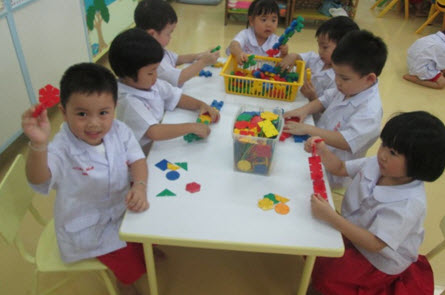
These images are retained from the original page as examples of published learning activities and programme information. Some contain Thai text or historical dates. They do not guarantee the same result for a new learner. Confirm current programmes with the team.
View original images


Frequently asked questions
Does child-centred mean agreeing to every request?
No. The article emphasises observation, appropriate support and clear routines.
Must home activities duplicate school?
No. The source values a variety of appropriate experiences.
Does resisting an interruption prove dislike of the next task?
No. Consider the context and observe over time.
Contact and related pages
Tell the team about the learner or organisation, relevant experience and the intended learning purpose. Confirm the current programme, equipment, availability, schedule and fees before booking.
Contact Raise Genius School service overview
- From Peekaboo to Questions about Quantities
- A Guide to the Archive’s Discussion of Cognitive Development
- How a Different Question Can Change a Robot Project
- Small Ideas, Mechanisms and Creative Construction
- Questions, Confidence and Manageable Challenges
- Thinking, Design, Hand Use and Sharing a Creation
- Exploring a Child’s Learning Strengths
- Discovering Children’s Interests without Pressure
- A Short Classroom Reflection on Learning Together
Course-selection guide · Robotics portfolio projects · Competition preparation · Team advice and coaching · Course guide · General FAQ
Related services: School robotics camps · STEM activity stations
Related learning: Raise Maker Arduino · micro:bit robotics · IOTBot & AI · Portfolio preparation · Camp proposal · Accompanying teachers
Related reference: NAEYC: developmentally appropriate practice
