
SCHOOL SERVICES · RAISE GENIUS
Robotics Team Coaching & Project Advice
Robotics team coaching supports pupils as they research, design, build and test their own projects. Raise Genius offers project advice and ongoing coaching for primary and secondary teams, with the emphasis on learning, teamwork and problem solving.
Discuss your school’s plansOn this page
Two approaches to robotics team coaching
Advice: pupils develop their project or practise on a competition field independently. When they encounter a problem or need direction, they consult an adviser. The original service describes this as particularly suitable for older secondary learners who can continue building and investigating on their own.
Coaching: pupils still carry out the project and competition practice themselves, while a teacher provides continuing guidance, explanations and help with problem-solving strategies. The source describes this closer support as suitable for both primary and secondary learners.
Neither option means that an adult completes the pupils’ project for them. The amount and kind of support should match the learners’ readiness and the applicable event rules. Discuss expectations with the team and the school before deciding which format to use.
Learning through research, testing and teamwork
The published approach adapts the habits of a research project for school-age pupils. Learners analyse a problem, search for information, experiment and work together. The aim is to help them build knowledge through their own investigation.
Robotics team coaching encourages a planned way of working: pupils discuss possible designs, construct and control a robot or automation project, test what happens and consider how to improve it. They practise explaining decisions and responding when an approach does not work as expected.
The original objectives include effective project work, independent research, team organisation, technical development and a positive attitude towards work. Pupils practise leadership and supporting others, as well as building to meet a particular challenge.
The source explicitly emphasises the benefits of completing a project rather than simply winning or losing. Coaching can help structure practice and reflection, but it does not promise competition entry, rankings, prizes or any particular educational admission outcome.
Teaching experience and project resources
The source describes a teaching team with engineering and robotics qualifications at bachelor’s and master’s level from KMUTT. It also describes experience in teaching, practical projects and robotics judging, used to guide pupils towards appropriate ways of working.
The service aims to give learners explanations that match their questions and to suggest further learning when they are ready. Those historical profile statements do not imply privileged access to judges, advance knowledge of a future challenge or a guarantee of an event result.
The original equipment examples include LEGO Mindstorms NXT 2.0 and EV3, Arduino and Raspberry Pi. They illustrate the breadth of the earlier project work, not a promise that every platform is supported or permitted in every current competition. Confirm the actual project, kit and software requirements before a proposal is agreed.
Group size, schedule and venue
The original service gives an indicative group size of two to ten pupils, depending on the competition league. The final arrangement must fit the current event rules and the pupils’ learning needs. A school’s training group and an officially registered competition team may have different requirements.
Training can be discussed around the school and pupils’ schedules, including after-school evenings and weekends. The source describes using either the requesting school’s venue or a Raise Genius centre. Confirm the current venue, access and available times rather than relying on a historical branch caption.
Before choosing robotics team coaching, share the pupils’ year groups and experience, the intended project or event, current equipment and the time available for independent practice. Request a clear scope covering the support format, session plan, coach, equipment, fees and any event-related responsibilities.
Previous school advice and coaching projects
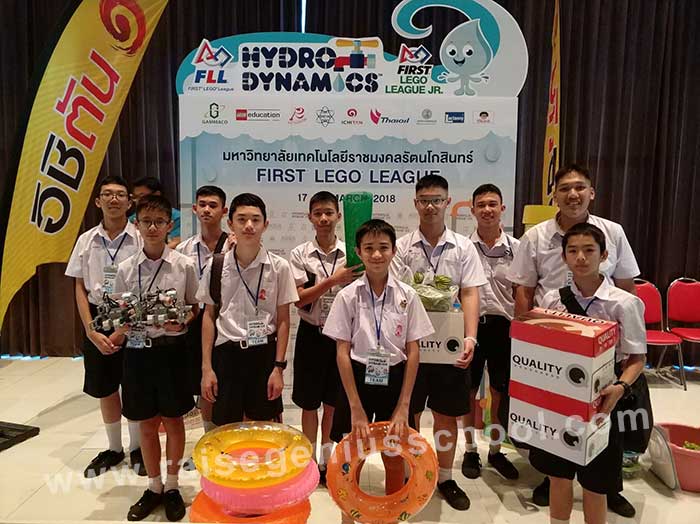
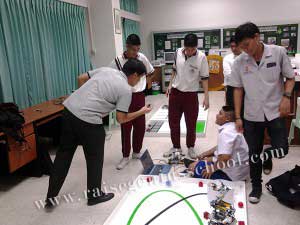
The archive records local-government robotics-league preparation at Tessaban 1 Nong Sai in 2019, and FLL 2017-2018 and WRO 2018 work with Sukhonthirawit School. These examples illustrate earlier school-team support.
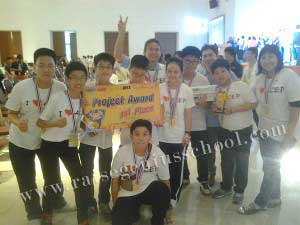
Other source examples include Assumption College Samut Prakan in 2014, where pupils received project and construction guidance, and Assumption College English Program, Rama II. The ACEP account records first place in a Project Award at FLL 2014; confirm the team, award title and date against original records before using the account in new publicity.
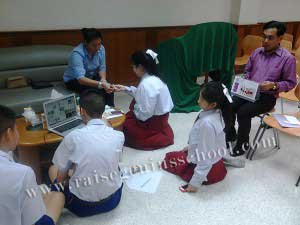
The source also shows coaching for Saipanya School under Royal Patronage at the earlier Raise Genius Pracha Uthit location, with guidance on strategies and robot construction for a competition challenge. Archive captions identify past activities and do not confirm current branch availability.
The published profile mentions National Innovation Agency support as background to the institute. It does not establish endorsement of a current coaching package by a competition organiser. Contact Khun Pui or Teacher Num for the current arrangements, and use official organiser documents for current rules.
Published project photographs
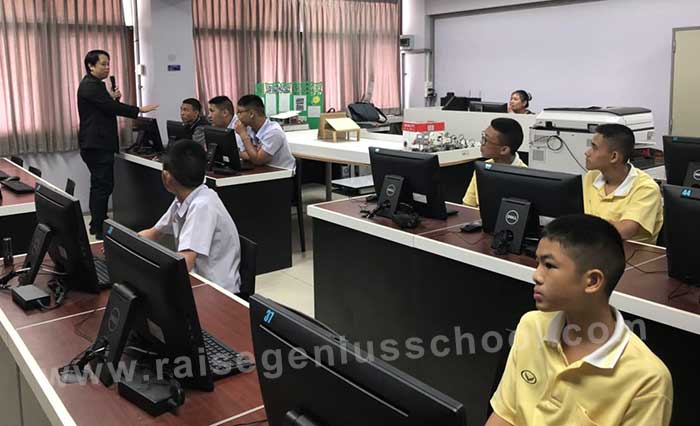
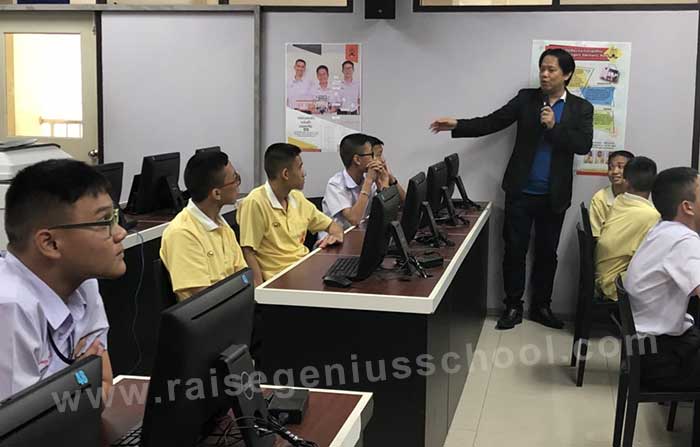
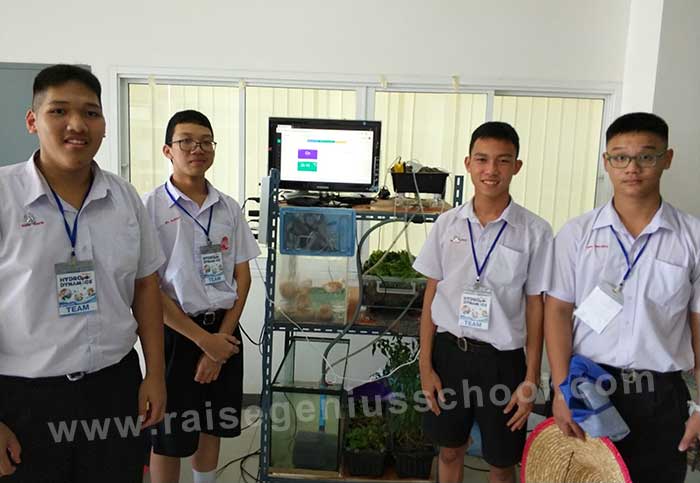
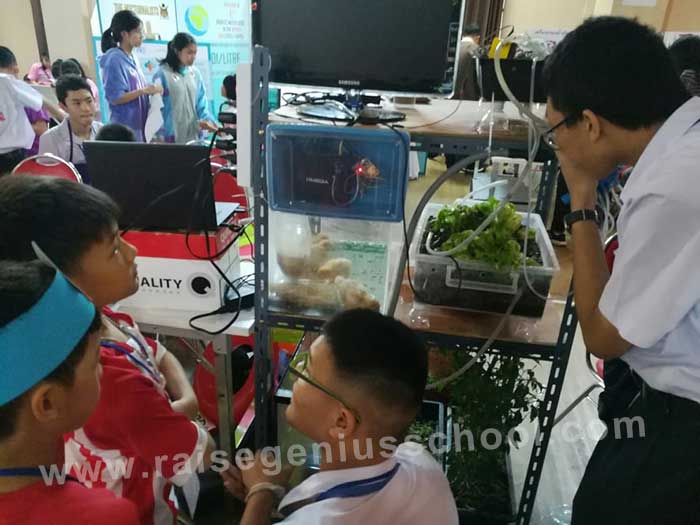
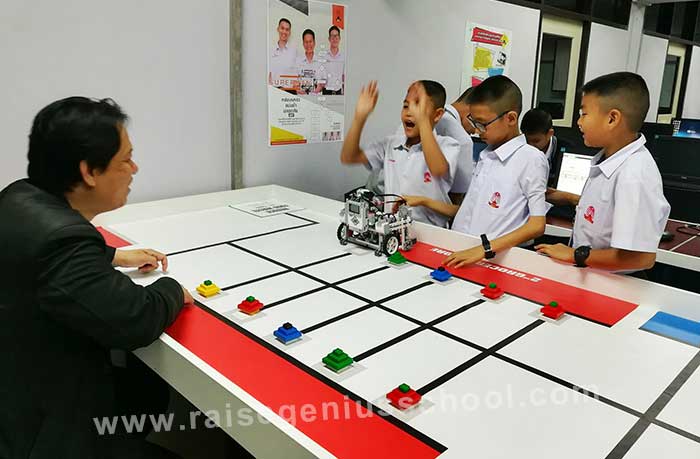
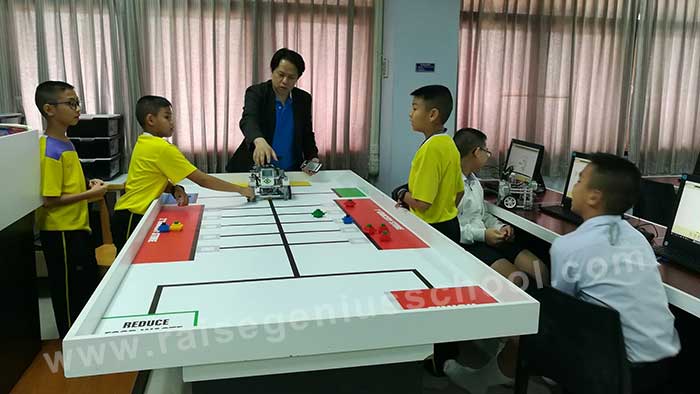
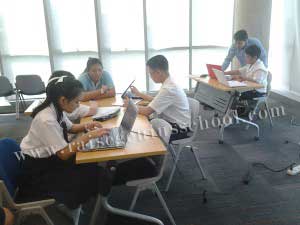
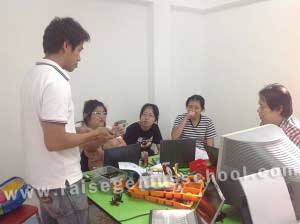
These images are retained from the original service page as examples of previous work. Some contain Thai text or historical dates and prices. Confirm current equipment, availability and conditions with the team.


Frequently asked questions
What is the difference between advice and robotics team coaching?
In the advice format, pupils work independently and consult an adviser when they need guidance. Coaching provides more continuous teacher support while pupils still do the building, programming, practice and project work themselves.
Which learners suit each support option?
The source suggests independent advice mainly for older secondary pupils, with closer coaching suitable for primary and secondary teams. Discuss readiness, experience and the project before choosing an arrangement.
Will the coach build or program the competition robot?
The published approach keeps the practical work with the pupils. Coaches guide thinking, explain techniques and support problem solving. The permitted level of adult help must also comply with the selected event’s current rules.
How many pupils can join and where can sessions take place?
The original outline lists 2-10 pupils depending on the league, with sessions at a school or a Raise Genius centre. Confirm the final group, current venue, dates and registered-team rules for the intended event.
Which robot kits are used?
Historical examples include NXT 2.0, EV3, Arduino and Raspberry Pi. The actual kit, software and suitability for the chosen competition must be confirmed before booking or purchasing equipment.
Does robotics team coaching guarantee winning?
No. The source places learning and project development ahead of winning or losing. Coaching develops skills and preparation; entry, selection, awards and other event outcomes are not guaranteed.
Contact and related school services
Tell the team the school name, year groups, pupil or teacher numbers, preferred dates, location and budget. Agree the current content, equipment, fees, schedule and responsibilities in a written proposal before booking.
Contact Raise Genius School service overview
Current organiser resources: Official FIRST LEGO League information and Official World Robot Olympiad competition resources. Check the current season and local organiser before selecting an event or equipment.
Robotics teacher training · School robotics classrooms · Individual course guide · General FAQ