Preparing a School Robotics Camp Venue
RAISE GENIUS · PARENTS & SCHOOLS
Preparing a School Robotics Camp Venue
A robotics camp venue does not have to be a new specialist laboratory. The source prioritises a suitable school room, tables for small-group work, power near the instructor and teachers who know the pupils. The visiting team brings the agreed robots, mission areas and teaching materials.
Contact the teamOn this page
Seven robotics camp venue checks
1. Confirm pupil numbers by year group and by round. The article’s full-day example is thirty to eighty learners; its rotating-station example uses around forty to ninety per station and ninety to one hundred and twenty minutes per round. These differ from other source pages, so agree the actual plan.
2. Choose a covered room where noise and conditions can be managed. An enclosed meeting or activity room is the preferred example. If seats are fixed in lecture rows, check whether small-group construction can still work.
3. Arrange tables for groups. The source suggests four to six pupils around a table with room for both the parts box and the robot being assembled. Keep the working surface usable rather than fill it with unrelated items.
4. Locate the instructor’s power supply for a notebook and projector. Agree any extension-cable arrangement with the school, keeping movement routes clear and addressing trip hazards before pupils enter.
5. Check the floor and movement routes. Mission areas need a suitable surface, and groups should be able to move between spaces without crossing queues or equipment.
6. Test the screen, sound and microphone. The source highlights a wireless microphone and spare batteries because a room full of group work can be noisy.
7. Assign accompanying teachers and one coordinating teacher who can make event-day decisions. The instructors know the robotics; the school’s teachers know the children and their needs.
Match the robotics camp venue to the actual grouping
The source’s example of two hundred and forty pupils does not require one room seating everyone for the entire activity. It proposes three or four nearby areas with some separation of sound and movement of around three to five minutes.
Those figures illustrate a layout discussion, not a guaranteed capacity calculation. Room dimensions, exits, activities, supervision and breaks need to be checked in the actual school plan.
Enclosed multipurpose rooms can offer flexible table placement. A gym may be possible with attention to echo and sound; exposed courtyards, canteens or under-building areas can make wind and competing announcements more difficult.
A countdown for the robotics camp venue
About two months before: confirm the room with the responsible school team, enter it in the calendar and tell staff who will be affected by furniture changes.
About four weeks before: share room photographs and confirmed pupil numbers so that the team and coordinator can discuss stations and rounds.
Two or three days before: test the projector, audio and microphone and confirm the accompanying-teacher list. The day before: arrange group tables, clear unrelated items and confirm access and any advance setup with the visiting team.
On the morning: the source suggests opening the room at least an hour early for the equipment and mission areas. Confirm actual arrival and setup arrangements, since the article also mentions preparation on the previous day.
People and information complete the preparation
An accompanying teacher helps a quiet child take a turn, keeps the group together and knows the local arrangements. A coordinator provides one contact for timing, room changes or another practical decision.
Begin the enquiry with learner numbers, year groups and preferred dates. The team can then propose a format and quotation before the school confirms booking and room details.
If an open or outdoor area is the only option, send photographs and discuss shelter, floor, sound, small parts and a weather backup. The source FAQ allows this conditionally; its preference for an enclosed space should not be mistaken for a promise that every outdoor venue works.
Original photographs and artwork
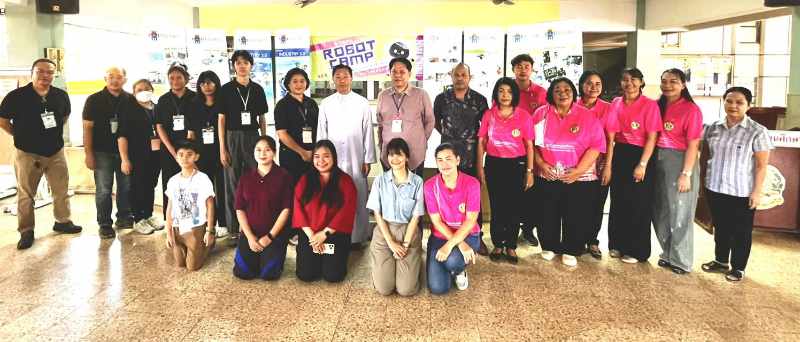
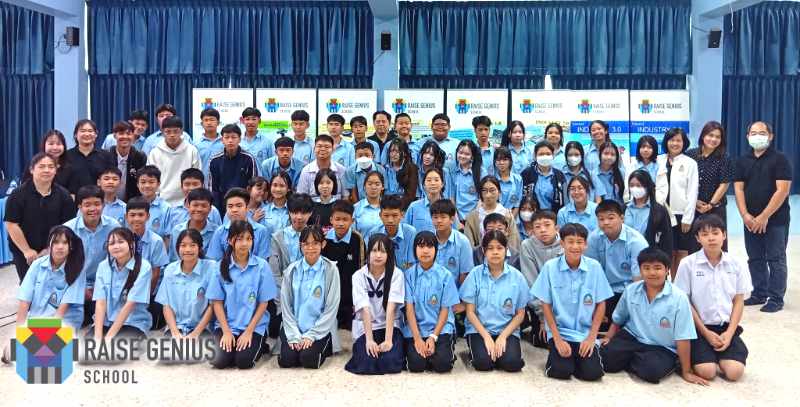
These images are retained from the original page as examples of published learning activities and programme information. Some contain Thai text or historical dates. They do not guarantee the same result for a new learner. Confirm current programmes with the team.
View original images

Frequently asked questions
Can a school without a large enclosed hall arrange a camp?
The source allows alternative spaces subject to checking floor, shelter, sound, screen visibility and enough group-work room. Share actual photographs and agree suitability with the team.
Can stations be outdoors on Science Day?
The source treats this as conditional on shelter, a suitable floor and a backup indoor plan, with small-part activities preferably inside. Confirm the actual setup in advance.
When are pupil numbers needed?
Share the estimate at the first discussion and confirm numbers by year group as planning progresses. They determine stations, equipment, staffing and the room layout.
Contact and related pages
Tell the team about the learner or organisation, relevant experience and the intended learning purpose. Confirm the current programme, equipment, availability, schedule and fees before booking.
Contact Raise Genius School service overview
- Study Paths for Young Inventors: Five Options
- School or Offsite Robotics Camps: Five Checks
- Individual or Group Coding Lessons for Children
- Academic or Vocational Robotics after Lower Secondary
- Choosing a Robotics Engineering Degree: Interests, Labs & Projects
- Robotics Camps for Small Schools: Start with the Group
- Primary and Secondary Robotics Camps: Match the Challenge
- Planning Robotics Stations for School Events
- An Authentic TCAS Portfolio: Show Your Own Work
Course-selection guide · Robotics portfolio projects · Competition preparation · Team advice and coaching · Course guide · General FAQ
Related services: School robotics camps · STEM activity stations
Related learning: Raise Maker Arduino · micro:bit robotics · IOTBot & AI · Portfolio preparation · Camp proposal · Accompanying teachers
Related reference: IPST STEM resources (Thai)