Robotics Engineering Careers and a Changing AI Workplace
RAISE GENIUS · PARENTS & SCHOOLS
Robotics Engineering Careers and a Changing AI Workplace
Robotics engineering careers can involve mechanisms, electronics, software and control working together. The original article compares six directions and addresses families’ concerns about AI. No field should be described as immune to change, and a childhood course cannot guarantee a future job.
Contact the teamOn this page
Robotics engineering careers: six directions in the source article
Industrial robot design and programming: work concerned with robot mechanisms, movement and tasks in a production setting.
Automation engineering: connect machines and controls into a functioning process rather than focus only on one robot.
Mechatronics: develop systems at the intersection of mechanical, electrical and software components.
AI-related robotics development: explore information processing, perception and decision-making for a physical system. The source gives vehicles, drones and service robots as examples rather than current job vacancies.
Automation and robot maintenance: investigate faults, adjust equipment and connect practical observations with technical understanding.
Research and development: investigate new ideas in areas such as agriculture, medicine or other applications. Actual roles and qualifications vary by employer and institution.
How to discuss AI without a guaranteed forecast
The source distinguishes repetitive information-based tasks from work involving physical conditions, system design and responsibility for a whole process. That is a framework for asking questions, not a reliable numerical forecast of replacement risk.
AI tools may change both programming and practical engineering work. A role can contain tasks that are automated and other tasks that still require human judgement. Avoid promising that a particular job cannot be automated.
The original attributes a discussion of AI and employment to DEPA. Treat it as contextual reading rather than a current vacancy, salary or recruitment forecast. Employers and occupations can change in different ways; no categorical job guarantee follows from choosing a course.
Preparation through the school years
Around nine to ten: explore construction and simple cause-and-effect questions. The learner need not choose an engineering profession at this age.
Around ten to twelve: the source suggests introductory commands alongside mechanisms, adjusted to readiness. Lower secondary can explore controllers, projects and an interest in hardware, code or both.
Upper secondary: a more complete Arduino, C++ or IoT-related project may help the learner investigate a practical interest and document decisions. Current programme eligibility and university requirements remain separate.
The source’s broad degree families include robotics/automation, mechatronics, electrical/electronics/control and computing/AI. Their actual curricula overlap and vary; do not reduce computer engineering to software alone.
School examples and a realistic next discussion
The original describes the founder’s FIBO master’s study, KMUTT incubation and former learners later admitted through portfolios. These are attributed school accounts requiring approved wording rather than guarantees for a new learner.
Its Maker example gives fourteen live Sunday sessions, small groups of up to six and Arduino/C++/IoT work. Confirm the actual current programme, prerequisites, staffing, schedule and fees.
Ask what the learner enjoys doing and what they want to understand next. Practical projects can help identify an interest while school subjects and the ability to learn new tools remain important.
Original photographs and artwork
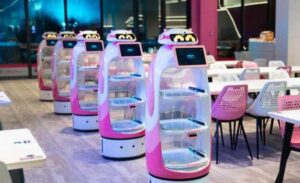
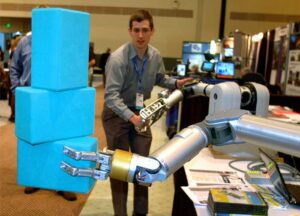
These images are retained from the original page as examples of published learning activities and programme information. Some contain Thai text or historical dates. They do not guarantee the same result for a new learner. Confirm current programmes with the team.
View original images

Frequently asked questions
Which careers are described?
The source covers industrial robotics, automation, mechatronics, AI-related robotics, maintenance and research/development. Actual requirements and opportunities depend on the role and employer.
Will AI replace robotics jobs?
No categorical answer is established. Tasks and roles can change. The draft avoids describing an entire field as AI-proof or guaranteeing demand.
When can a child start preparing?
The source suggests age-appropriate construction and coding before more complete secondary projects. Early activities explore an interest; they do not require an early career commitment.
How does robotics differ from computer engineering?
Robotics often integrates physical mechanisms, sensors, electronics and control code. Computing degrees vary and can also include hardware and AI; compare actual curricula.
What can a family do now?
Let the learner try a manageable project, discuss what they enjoy and keep honest records of learning. Confirm current teaching and later admissions requirements separately.
Contact and related pages
Tell the team about the learner or organisation, relevant experience and the intended learning purpose. Confirm the current programme, equipment, availability, schedule and fees before booking.
Contact Raise Genius School service overview
- Benefits of Robotics Learning for Children
- Minecraft Education: First Coding Steps for Primary Learners
- When to Start a Robotics and AI Portfolio
- AI Learning for Children: Start with Coding Foundations
- Equipment, Curriculum and Training for a School Robotics Club
- Starting an AI or IoT Project for a Portfolio
- Choosing a Coding Course for Children: A Family Guide
- A Guide to School Robotics and STEM Camps
- Roblox Game Making or Minecraft Education: Where to Begin?
Course-selection guide · Robotics portfolio projects · Competition preparation · Team advice and coaching · Course guide · General FAQ
Related services: School robotics camps · STEM activity stations
Related learning: Raise Maker Arduino · micro:bit robotics · IOTBot & AI · Portfolio preparation · Camp proposal · Accompanying teachers
Related reference: IPST STEM resources (Thai)