Starting Coding and AI: An Age & Readiness Guide
RAISE GENIUS · PARENTS & SCHOOLS
Starting Coding and AI: An Age & Readiness Guide
Starting coding and AI can mean learning to give clear instructions, solve a small problem and test an idea before tackling advanced systems. The original 2026 article presents a gradual path from playful logic to blocks, Python, robotics and personal projects. Age ranges are examples; experience and interest shape a suitable start.
Contact the teamOn this page
Three age-stage examples for starting coding and AI
Ages five to seven: explore instructions and sequences through robot games, logical play or unplugged activities. A learner can practise describing what happens first and next without needing a complex computer program.
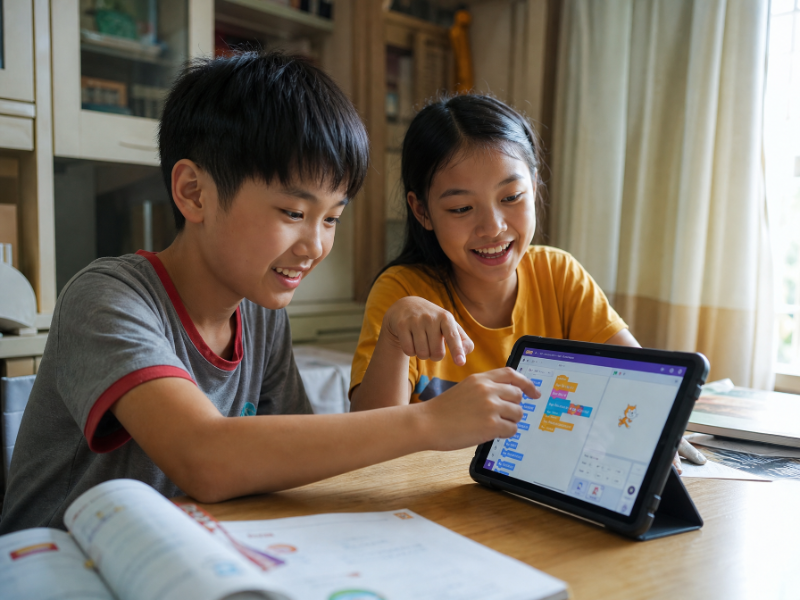
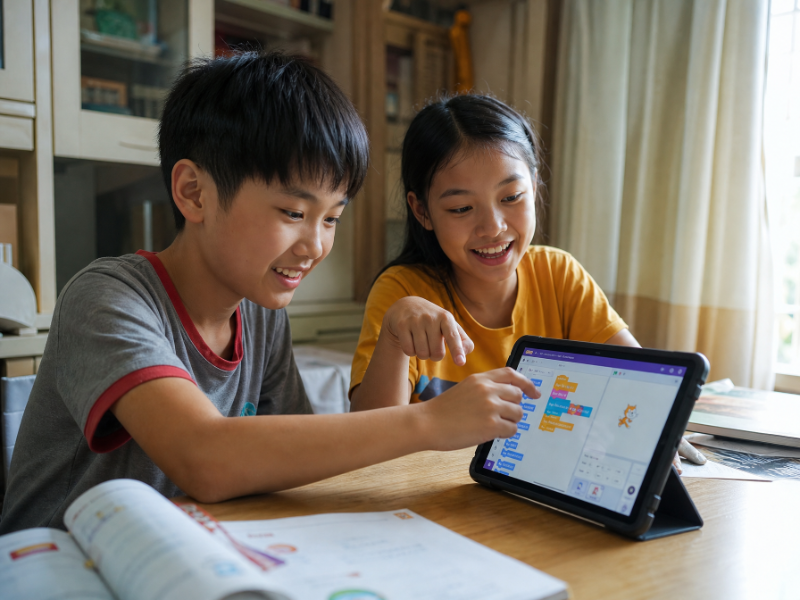
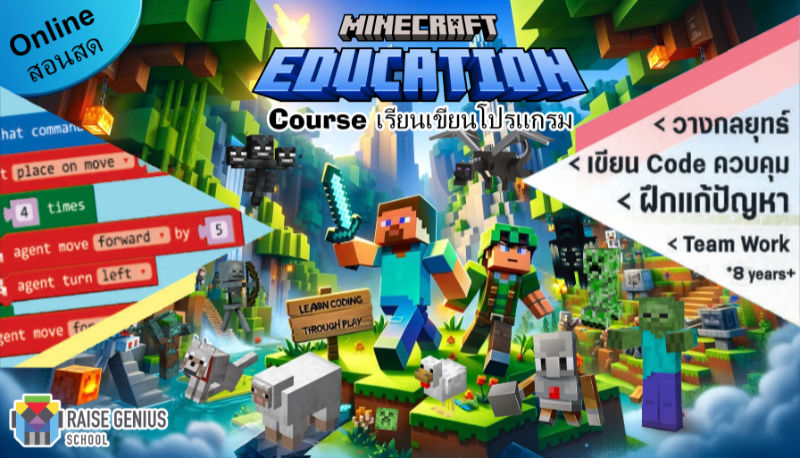
Ages eight to ten: try block coding such as Scratch or Minecraft Education. Blocks provide a visible way to organise commands, repeated actions and choices within an activity.
Ages eleven to fifteen: learners may explore Python, graphical programming or more complex robots as their experience develops. Moving to a more demanding tool should connect to understanding, not simply to a birthday.
These stages are the article’s broad examples. A beginner in upper primary or secondary can still start with foundations, while an experienced younger learner may need a different challenge. Ask a teacher to assess previous work.
What coding and AI learning is intended to develop
Problem solving: when a program fails, learners investigate what went wrong and test a change. The article emphasises learning through repeated attempts rather than being expected to succeed immediately.
Logical thinking: a sequence needs clear instructions in the intended order. Missing or repeated commands can change the result, creating a reason to explain a process precisely.
Creativity: learners can make a game, a robot or an application based on an idea. The point is to use instructions to create something understandable, rather than memorise commands without a purpose.
Teamwork and communication: projects give learners a reason to discuss a design, explain a choice and work with classmates. These are educational aims whose development depends on the activity and the individual learner.
School pathways described in the original article
The published examples include Coding & Game Maker using Python, graphical programming and Roblox; STEM robotics with micro:bit, Arduino and IoT; and Portfolio Robot & AI project work.
The article connects physical projects and programming with documenting learning for further study. A portfolio should show the learner’s own work, reasoning, tests and improvements. Course attendance or an attractive finished object alone does not establish understanding.
The source discusses coding and AI as relevant to a changing technological world. Its broad comments about national uptake and future opportunities are context from the 2026 article, not a new statistical study or a promise of employment.
Starting coding and AI later is still a practical conversation
The source suggests that one to two years of continued learning can build foundations for some learners. That is a planning illustration, not a guaranteed time to reach a university portfolio standard.
For an upper-primary or secondary beginner, identify a small task of interest, discuss suitable foundations and leave room for practice. Compare the child’s starting point with the proposed class rather than with another family’s progress.
Parents can ask what the learner wants to create and what help they need to begin. Confirm the currently offered programme, prerequisites, equipment, schedule and fees with the team. University admissions requirements should be checked separately with the institution.
Original photographs and artwork
These images are retained from the original page as examples of published learning activities and programme information. Some contain Thai text or historical dates. They do not guarantee the same result for a new learner. Confirm current programmes with the team.
View original images
Frequently asked questions
Is seven too young to begin?
The source gives playful sequencing and unplugged or robot activities around ages five to seven. A suitable activity depends on readiness; advanced programming is not the required starting point.
Is it too late to start in secondary school?
No fixed deadline is established. The article encourages a gradual foundation and continued practice. The time needed depends on the learner, project and goal.
Does a coding course guarantee an AI career or a university place?
No. The article discusses possible learning pathways. Careers and admissions depend on many later choices, skills and independent requirements.
Contact and related pages
Tell the team about the learner or organisation, relevant experience and the intended learning purpose. Confirm the current programme, equipment, availability, schedule and fees before booking.
Contact Raise Genius School service overview
- Entrepreneurial Maker Course: Automation & Presentation
- Online EV3 Programming Lessons: Original Video Archive
- LEGO Robotics for Kids: Build, Program & Present
- Scratch or Python for Kids: Choosing a Starting Point
- From Playing Games to Coding with Minecraft & Roblox
- Learning Robotics When Maths Is Difficult
- Preparing a Robotics Engineering Portfolio
- Writing a School Robotics Camp Proposal
- Teacher Support for School STEM Activity Stations
Course-selection guide · Robotics portfolio projects · Competition preparation · Team advice and coaching · Course guide · General FAQ
Related services: School robotics camps · STEM activity stations
Related reference: IPST computing-education resources (Thai)