
Choose Toys around Age, Interests and Readiness
RAISE GENIUS · PARENTS & SCHOOLS
Choose Toys around Age, Interests and Readiness
Choosing age-appropriate toys starts with the child who will use them. The archive opens around Thailand’s Children’s Day, when family outings and new toys can provide opportunities to spend time together.
Contact the teamOn this page
Choosing age-appropriate toys for younger children
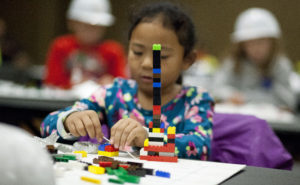
For ages four to six, the source discusses fine-motor activities involving hands and fingers and larger movements involving arms and legs. Its small-movement examples include colouring materials, modelling clay, simple puzzle boxes and construction bricks.
For larger movements it mentions bicycles, trampolines and roller skates. These are examples from the archive, not blanket recommendations for every child. Choose an appropriate setting, equipment and supervision rather than assuming that an item is safe because it appears in an age list.
Children differ in what they can manage and what they enjoy. Drawing or building may invite careful hand movements, while outdoor play offers other opportunities. The source’s categories do not imply that running and climbing have no value for balance or coordination.
Rules, sequences and challenges in the school years
The source groups ages seven to eleven around activities with rules, steps and conditions. It describes children gradually joining agreed ways of playing with friends, using traditional games and sports as examples.
Its toy suggestions include puzzles, a Rubik’s Cube, jigsaws, LEGO, sports equipment and selected digital games. For a digital activity, families can agree on content and time together. No game is automatically suitable simply because it is on a tablet.
The age groups are broad editorial examples influenced by developmental theories. They are not tests of intelligence or firm boundaries defining what a child can understand.
Older learners, changing interests and safe choices
For ages twelve and above, the archive suggests illustrated educational books, art materials, science kits and programmable robotics. LEGO MINDSTORMS is its historical example of connecting motors, sensors and code.
The original calls older children small adults. This is a metaphor, not a claim that a twelve-year-old has adult judgement or complete cognitive maturity. Match the complexity and independence of an activity to the individual learner.
CPSC toy-safety guidance stresses age labels and keeping small parts away from children under three. Check the actual product instructions, especially when toys are shared with younger siblings. The child’s interest remains central, alongside suitability and safety.
Original photographs and artwork
These images are retained from the original page as examples of published learning activities and programme information. Some contain Thai text or historical dates. They do not guarantee the same result for a new learner. Confirm current programmes with the team.
View original images
Frequently asked questions
Are the three age groups strict developmental rules?
No. Ages four to six, seven to eleven, and twelve and above organise the archive’s examples; individual readiness and interests vary.
Can siblings share every construction toy?
No. Check the manufacturer’s age guidance and small-part warnings before choosing materials for children of different ages.
Is MINDSTORMS the equipment currently used?
It is the archive’s example. Ask Raise Genius which platform and equipment the current programme provides.
Contact and related pages
Tell the team about the learner or organisation, relevant experience and the intended learning purpose. Confirm the current programme, equipment, availability, schedule and fees before booking.
Contact Raise Genius School service overview
- From STEM to STEAM: Connecting Knowledge with New Ideas
- Why Do Some Children Enjoy Learning during the Holidays?
- From Concrete Examples to Abstract Thinking
- Learn a Little, Return to It and Make Practice Manageable
- Pretend Play: Build a Story with Flexible Materials
- Help Children Explore Their Interests through Activities
- Find Shared Activities for Siblings of Different Ages
- Encourage Children to Try, Make and Recognise Progress
- Practise Analytical Thinking through Questions and Making
Course-selection guide · Robotics portfolio projects · Competition preparation · Team advice and coaching · Course guide · General FAQ
Related services: School robotics camps · STEM activity stations
Related learning: Raise Maker Arduino · micro:bit robotics · IOTBot & AI · Portfolio preparation · Camp proposal · Accompanying teachers
Related reference: CPSC: Think Toy Safety
